10 Easy Vegetables for Your First Garden
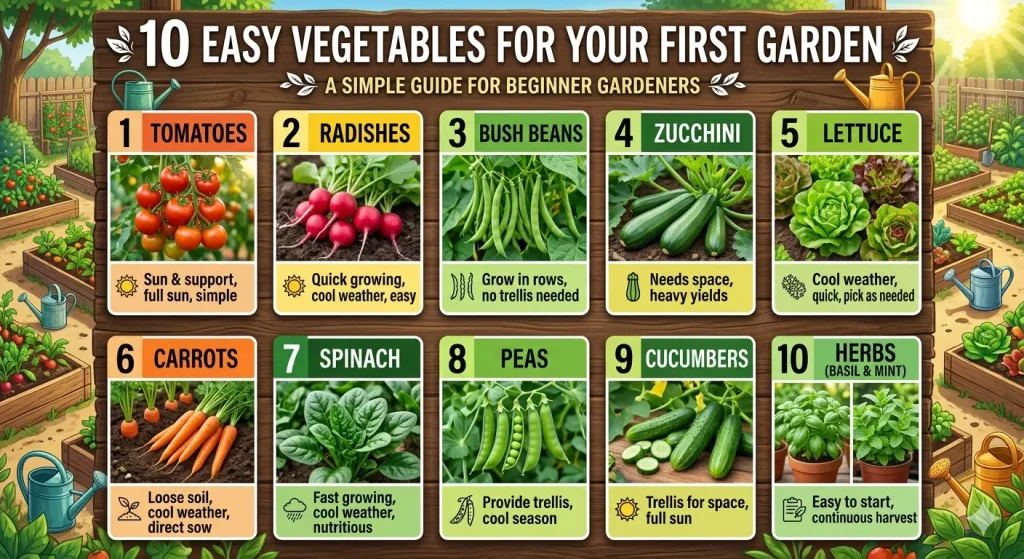
Everyone should be able to experience the pleasure of growing their food, even if they’ve never touched a bag of potting soil before.
Every gardener has a memory of a certain time. It’s the moment you go outdoors, kneel down next to a plant you cultivated from an insignificant seed, and choose something to eat for dinner. It could be a tomato that is still warm from the sun in the afternoon. It could be a few green beans or a cucumber that’s so fresh that it almost breaks in your hands.
That time? It makes you different.
But let’s take a step back. Before that glorious moment, there is generally a less beautiful one: the time you stood at the garden center, absolutely lost, looking at aisles and rows of seed packets and thinking, “Where do I even begin?”
I know how you feel. Many gardeners have. And here’s what I wish someone had told me back then: you don’t have to grow everything. You only need to grow the appropriate things that suit your climate, soil type, and personal preferences.
It’s not about being perfect when you start a garden. It’s about getting your hands filthy, learning as you go, and most importantly, having fun with the process. Choosing picky, high-maintenance crops that make you feel like a failure by mid-July is the quickest way to destroy your excitement.
So let’s not go there.
Let’s talk about ten veggies that are simple to cultivate, even if this year is your first time gardening. These are the ones that are easy to forgive. These vegetables are resilient and can tolerate being neglected for a day or two without water. These vegetables can generate significant income for you, even if you make mistakes in their care.
Because you will make mistakes. That’s totally OK. That’s what gardening is.
1. Lettuce — The Gentle Introduction
If vegetables had personalities, lettuce would be the friend who is always there for you and never judges you. It’s one of the easiest crops to cultivate, and it’s quite rewarding because it grows so quickly.
Most kinds of lettuce can be picked in 30 to 45 days. This means that you can plant seeds and eat a salad from your garden in approximately a month. That kind of speedy turnaround is ideal for a newcomer who wants to see results right away.
Lettuce grows best in cooler conditions, so spring and fall are excellent times to plant it. It doesn’t need full sun; in fact, a little shade in the afternoon can prevent it from bolting, which is when it sends up a flower stalk and the leaves turn bitter. You may plant it in garden beds, raised beds, pots, and even window boxes.
Tip: Choose “cut and come again” types of plants, like loose-leaf lettuce. You don’t have to cut off the complete head; just cut off the outer leaves and let the plant keep growing. You can eat from one planting for weeks.
Begin with types like Buttercrunch, Black Seeded Simpson, or a mesclun mix. Spread the seeds out on wet soil, softly cover them, water them, and watch the magic happen. That’s all there is to it.
2. Radishes — The Instant Gratification Crop
Radishes are faster than lettuce. Some kinds can be ready in as short as 22–25 days. That’s less than a month from planting the seeds to eating them. Radishes are proof that you can achieve these results, even if you’re a brand-new gardener.
Radishes are also effortless to care for. They can grow in virtually any kind of soil, don’t need a lot of room, and bugs mostly leave them alone. Just push the seeds about half an inch into the ground, leave an inch between them, water them often, and wait a few weeks.
Radishes are excellent because they educate you to pay attention. When the small shoulders of the radish start to show above the soil line, that’s a sign that they’re almost ready. Take one out, wash it off, and eat it. A radish you cultivated yourself is the best kind. It’s spicy, crunchy, and full of flavor in a way that store-bought ones never are.
Some excellent ones to try include Cherry Belle (a round red radish), French Breakfast (long and mild), or Easter Egg (a delightful mix of colors that youngsters love).
A minor warning: don’t keep radishes in the ground for too long once they are ripe. They can become hard and fibrous. If you pick them when they’re fresh and soft, you’ll see why people love to plant.
3. Green Beans — The Reliable Workhorse
Green beans are like a friend who always shows up when they say they will. If you plant the seeds and give them water and sunlight, they’ll make many beans all summer long.
Bush beans and pole beans are the two basic varieties. I normally tell newbies to start with bush beans. They turn into little, bushy plants that don’t need any kind of support. You plant them, and after approximately 50 to 60 days, they grow to be about 18 inches tall and start making beans. Simple.
Pole beans, on the other hand, grow up. They need something to climb on, like a trellis, fence, or teepee, but they produce beans for a longer time and can give you more beans overall. If you’re feeling brave and have something for them to climb, go for it.
The secret to growing green beans is to plant them right in the ground after the latest frost date. They don’t like cold soil, and they definitely don’t appreciate being moved to a new place. Just push the seeds about an inch into warm soil, hydrate them, and then step back. In a week, you’ll see little plants poking through.
Pick the beans often when they start to grow. The more you pick the beans, the more the plant produces. This process is a lovely cycle.
Provider (an amazingly reliable bush bean), Blue Lake (a classic for eating fresh and canning), and Kentucky Wonder (a popular pole bean type) are some of my favorites.
4. Zucchini — The Overachiever
Gardeners joke that you should only lock your car in the summer when zucchini is in season. If you don’t, you’ll come back to discover a bag of zucchini on your front seat from a neighbor who is trying to get rid of their extra.
Zucchini grows considerably. You don’t have to do much to get enough food for your family from one or two plants. Zucchini is a great plant for a first-time gardener who wants to feel like they did a good job.
After the last frost, plant the seeds immediately in the garden where they will get full sun. Leave 3 to 4 feet between plants so they can spread. Give them a lot of water on a regular basis, and you’ll see them grow.
Zucchini grows quickly. Like, really, really fast. During the busiest time of year, check on your plants every day or two. A zucchini that was four inches long yesterday could be a foot broad tomorrow. Pick them when they are six to eight inches long for the finest taste and texture. It’s fun to show off the enormous ones, but they tend to be watery and filthy.
Be careful of powdery mildew, which looks like a white powdery covering on the leaves, and squash vine borers. Regular checks and good airflow might help you avoid these problems. Zucchini is so productive that you’ll have more than you can handle, even if you have issues.
Try these types: Black Beauty, Costata Romanesco (a beautiful Italian heirloom), or Golden Zucchini for a change.
5. Tomatoes — The Heart of Every Garden
I debated whether to put tomatoes on this list. Tomatoes can be difficult to grow because they attract pests like aphids and hornworms that can harm the plants if not managed. But I added them anyway, since tomatoes are what most people start gardening for.
And here’s the thing: tomatoes are easy for a beginner to grow if you pick the appropriate kind and follow a few simple rules.
Begin with cherry tomatoes. Sungold, Sweet 100, and Supersweet 100 are some of the most bulletproof types. They are strong and resistant to disease, and they make hundreds of lovely small tomatoes that you can eat all summer. Cherry tomatoes are far easier to care for than big beefsteak tomatoes, which can be more picky about watering, fertilizing, and staking.
Tomatoes need at least six to eight hours of full light every day. They need to be watered regularly (if you don’t water them, they will crack and get blossom end rot). They need some type of support, such as a cage, a stake, or a trellis.
You should acquire transplants from a nursery instead of growing from seed for your first year. You need to start tomato seedlings indoors six to eight weeks before the final frost. This approach makes things a little more complicated than you might be ready for, as it requires careful timing and attention to the seedlings’ needs during their early growth stages. It’s okay to start with nursery plants. Even skilled gardeners still buy transplants.
Dig a hole and plant them deep, so the stem is buried up to the first set of genuine leaves. The hidden stem will help the tomatoes grow roots, which will make the plant stronger and more resistant. Water the plants at the base (not from above), apply mulch to keep the soil moist, and fertilize them every few weeks using an organic fertilizer that is balanced.
Then wait. You’ll see why it’s so exciting when you eat that first ripe tomato from the garden. You’ll see what all the excitement is about.
6. Cucumbers — Cool, Crisp, and Cooperative
Cucumbers are another crop that develops almost by itself once it starts rolling in the warm season. Like zucchini, they make a lot of food. A few plants will give you cucumbers all summer long for salads, snacks, and even pickling.
There are two primary types: slicing cucumbers, which are the ones you eat fresh, and pickled cucumbers, which are smaller, bumpier, and excellent for preparing pickles. It’s simple to grow both.
After the last frost, plant cucumber seeds directly in the garden in a sunny place with soil that drains properly. They like being hot and wet, so make sure to water them well, especially when it’s dry. Mulching around the plants’ bases helps keep the ground moist and the fruits clean.
If you don’t have a lot of room, try growing cucumbers on a fence or trellis. The vines naturally rise, and extending them up saves room, lets more air flow, and makes the fruits straighter. Furthermore, it’s simpler to see and pick them when they’re hanging at eye level.
Pick regularly. You can get more cucumbers by selecting them more often, just like beans and zucchini. If they get too big on the vine, they will taste vile and have seeds in them.
Marketmore 76 (a reliable slicer), Spacemaster (small and great for containers), and National Pickling (if you want to make your own pickles) are all great choices for beginners.
7. Peppers — Sweet, Simple, and Stunning
Peppers are one of those plants that taste as delicious as they look. They are little and lovely, the fruits come in a wide range of colors, and once they are established, they don’t need much care.
I suggest that beginners start with sweet peppers, like bell peppers, banana peppers, or sweet Italian frying peppers. It’s easy to use hot peppers, but sweet peppers are more flexible in the kitchen, allowing for a variety of dishes such as salads, stir-fries, and stuffed peppers.
Peppers, like tomatoes, are warm-season crops that thrive in heat and sun. Start them as transplants (buy them from a nursery for your first year) and plant them after the last frost, when the ground has warmed.
You don’t have to do much to take care of peppers. They need full sun, regular water, and a little fertilizer every few weeks. They don’t normally need propping and are fairly resistant to pests. However, bigger bell pepper plants can benefit from a small cage or post as the fruits get hefty.
One thing to remember is that peppers can take a while to get going. If your plants don’t seem to be doing anything for a few weeks after you move them, don’t worry. They are putting down roots. As soon as it becomes hot, they’ll go.
For novices, California Wonder (the iconic bell pepper), Jimmy Nardello (a sweet Italian frying pepper with great flavor), and Lunchbox (a snack-sized sweet pepper that kids love) are all great choices.
8. Spinach — The Cool-Season Superstar
The most important thing is that spinach likes it chilly. Put it in the ground in early spring (as soon as the soil is ready) or in late summer for a fall harvest. When the temperature goes beyond 75°F, spinach bolts, which means it sends up a flower stalk and the leaves are brittle and bitter. So don’t try to grow it in the summer. Don’t go against what it wants; work with it.
Put the seeds directly in the ground about half an inch deep. Keep the soil moist and space the seedlings approximately four inches apart. Most kinds of spinach are ready to pick in 35 to 45 days, which is very fast.
You can harvest spinach as a “cut and come again” crop, much like you can with lettuce. Cut off the outer leaves and allow the inner ones to continue developing. This greatly increases the amount of food you can grow.
It’s also enjoyable to see spinach in the garden. It’s a pleasure to see those dark green, shiny leaves, and knowing how full of iron, vitamins, and antioxidants they are makes eating them even better.
Some excellent types to try include Bloomsdale Long Standing (a classic with crinkled, savoy-type leaves), Space (smooth leaves that are simple to wash), and Tyee (quite resistant to bolting).
9. Peas — A Sweet Spring Treat
One of the best things about gardening is growing peas. It’s almost like magic to open a pod and taste the luscious small peas inside, which are still warm from the garden.
Like spinach and lettuce, peas grow best in the cool months. You can plant them in early spring, as soon as the ground is ready. Peas can tolerate mild frosts and prefer cooler temperatures. That means planting in March or April in many places.
There are three primary kinds: sugar snap peas (you eat the full plump pod), snow peas (you eat the complete flat pod), and shelling peas (you eat only the peas inside). Sugar snap peas are a good choice for novices. They’re really sweet, fun to pick, and taste great raw right in the garden. You don’t have to cook them if you don’t want to.
Most types of peas are climbers, so they need some kind of support, such as a short trellis, a piece of chicken wire, or even some sticks inserted into the ground. They’ll grasp on with their small tendrils and climb gladly.
Put the seeds right in the ground, approximately an inch deep and two inches apart. Don’t let the soil become too wet, but keep it damp. Peas are legumes; therefore, plants can fix their nitrogen and don’t need a lot of fertilizer. In fact, they improve your soil.
Sugar Snap (the original and still one of the best), Oregon Sugar Pod (an outstanding snow pea), and Little Marvel (a delicious shelling pea) are my top favorites.
10. Herbs (Okay, Not Technically Vegetables — But Hear Me Out)
I get it, I get it. Vegetables are not herbs. But I’m putting them here because every first garden needs some herbs, and they’re easy and satisfying to grow.
Basil is the first herb you should try. It loves warm temperatures, grows quickly, and goes wonderfully with the tomatoes you are planting. To maintain the plant making bushy, tasty leaves all season, pinch off the bloom buds.
People don’t give parsley enough credit for how tough it is. It can endure cool weather, thrives in partial shade, and keeps making more. When it comes to cooking, flat-leaf Italian parsley tastes the best.
You can’t really kill chives. You only have to plant them once, and they’ll come back every year. Their purple flower puffs are beautiful and tasty, and their light onion flavor improves everything’s taste, from scrambled eggs to baked potatoes.
Mint is another plant that lives on; in fact, it’s too easy to cultivate. If you prefer to prevent it from overtaking your entire garden, consider planting it in a pot. But what about growing it on the terrace in a pot? It’s just right. Incorporating fresh mint into lemonade, tea, or a summer salad can significantly enhance the flavor.
Growing herbs next to your veggies will also assist in bringing pollinators and beneficial bugs to your garden, which can enhance the overall health and productivity of your plants. It’s a beneficial deal for both sides.
A Few Final Thoughts for the Brand-New Gardener
Before I let you leave, I want to give you some tips that I wish someone had given me when I first planted a garden.
Begin with something little. No joke. Your first year, a 4×8-foot raised bed or a couple of big containers will be enough. You can always add more next season. A little, well-kept garden will make you happier and give you more food than a big, messy one.
Good soil is everything. If you can only buy one thing, make it your soil. Your plants will develop quickly and provide you a lot of fruit if you fill your beds with excellent, compost-rich soil. Bad soil causes most of the difficulties that novices face, such as yellowing leaves, slow development, and low yields.
Water regularly. Most veggies need approximately an inch of water every week, either from rain or from you. Watering deeply and not very often is better than watering shallowly and often. Water in the morning when you can, and water the plant from the ground up instead of from above.
Don’t be afraid to fail. Certain plants will die. Some bugs will devour them. Some plants will simply struggle to thrive, and the reasons for their poor performance may remain unclear. That’s OK. Every gardener who has been at it for a while has a long list of things that went wrong. They learned something from each one. Your garden doesn’t have to be perfect. It only needs to be yours.
Listen up. The finest thing you can do as a beginning gardener is to just be in your yard. Every day, walk through it. Pay attention to what’s growing, what’s having trouble, and what’s being eaten. There is a relationship between gardening and the soil, the plants, and the seasons, as each element influences the health and growth of the others, creating a dynamic ecosystem that requires careful observation and understanding. You will learn more and become a better gardener the more you are there.
The Real Reason to Start a Garden
Link to the earth. Link to the seasons. Putting a seed in the ground and caring for it until it grows into something that keeps you alive is an ancient, fundamentally human thing to do.
A garden slows you down in a world that moves too quickly. It keeps you grounded, both literally and figuratively. It teaches you to be patient, humble, and amazed. It reminds you that you can’t rush some of the best things in life. They need to be grown.
So begin small. Begin with the basics. Put some radish seeds in the ground, plant some lettuce, and put a tomato plant in a sunny place. Don’t think too much about it. Don’t wait until you know everything, since you’ll never know everything. It’s a lifelong process to learn how to garden, and the ideal time to start is now.
There is a garden waiting for you. I promise that the first bite of something you grew will be one of the best things you’ve ever eaten.
Not because it’s lovely. But it’s yours.
Enjoy your gardening. 🌱