11 Best Ways to Secure Your Home
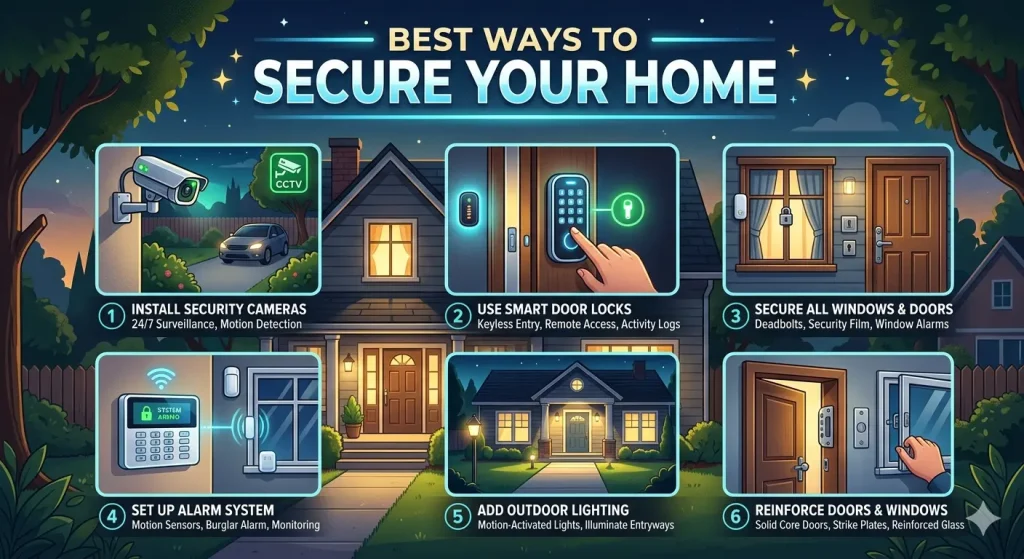
I’ll tell you about something that kept me up at night for weeks. Last year, while my neighbor was out to supper, someone broke into their home. Nothing major—the robbers took some jewelry and electronics—but what about the invasion of their privacy? They carried that with them for several months. What’s the worst? A few simple security precautions, such as installing motion sensor lights and securing windows, could have stopped it.
That event served as a wake-up call for me and may serve as one for you as well. Home security involves more than just installing expensive alarm systems or fortifying your home. It’s about creating a multi-layered security system that not only reduces the attractiveness of your home to thieves but also provides you with peace of mind.
I’ve devoted numerous hours to studying, speaking with security professionals, and putting these tactics into practice in my own home.
1. Upgrade to Smart Video Doorbells (Your First Line of Defense)
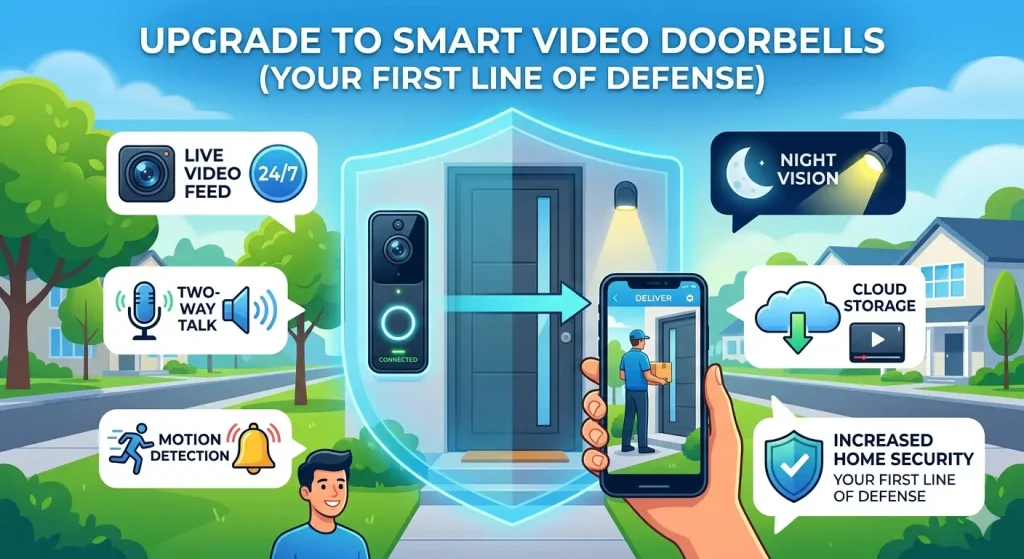
Here’s the deal with regular peepholes: crooks know you don’t always look. But what about a doorbell with a video? That’s a whole other story.
Two years ago, I put in a Ring doorbell, and it was one of the best things I’ve done for home security. These gadgets do a lot more than just show you who’s at the door. They record all the time, send alerts to your phone when they see movement, and enable you to talk to visitors even if you’re on the other side of the country.
Why they work so well:
- Visible deterrence (thieves stay away from homes with video doorbells)
- Preventing package theft (you can really see your packages being delivered)
- Gathering evidence in case something happens
- Two-way communication to make it feel like you’re home
Tip: Don’t just install it and forget about it. Install your doorbell in a location that allows it to capture the entire porch and a portion of the street. I learned this lesson the hard way when my initial installation just exposed people’s bodies. Furthermore, make sure it’s easy to see. You want those who might break in to know they’re being monitored.
Budget choices like Wyze have excellent features for less than $50. Premium options like Nest Hello or Ring Pro include more advanced features like facial recognition and customized zones.
2. Invest in High-Security Locks and Deadbolts
You might be surprised to learn that most home locks are effortless to pick or bump. I’m not trying to terrify you, but someone who knows what they’re doing can break into a normal builder-grade lock in less than a minute.
I updated to Grade 1 deadbolts, which are the best for home security, when I fixed up my house security. The difference is huge.
What to look for:
- ANSI/BHMA Grade 1 rating (can pass 10 strike tests and 250,000 cycles)
- Deadbolts must have a throw length of at least one inch.
- Reinforced striking plates with 3-inch screws that go into the wall stud and hold them in place
- Cylinders that can’t be drilled or picked
- Smart locks with encryption (if you want to go the smart route)
- I suggest the Schlage B60N or Medeco Maxum for excellent security. August Smart Lock Pro works with your existing lock to add smart features without replacing your secure hardware.
Don’t forget about your back door, garage door, and any other doors that lead outside. Your back door’s lock from 1985 isn’t going to help you if your front door is Fort Knox.
3. Install a Comprehensive Security Camera System
Video doorbells are excellent for your front door, but they’re not the only thing you need. A complete camera system monitors all the vulnerable areas on your property.
Don’t freak out about the expenses; you don’t need to pay $5,000 for a professional installation. I built up my whole 6-camera system for less than $400 with Reolink cameras, and it works excellently.
Placement is the key:
- Ensure that all entry points, including doors, windows, and garages, are blocked.
- Monitor driveways and walkways closely.
- If you can, obtain pictures of the license plates from several angles.
- Don’t forget about the backyard, where many break-ins happen.
Important features to have:
- Night vision (most break-ins happen while it’s dark)
- Weather resistance (this is obvious but often forgotten)
- Cloud and local
- storage alternatives (having more than one is a beneficial thing)
- Alerts on your phone and live viewing
- Wide-angle lenses cut down on the number of cameras needed.
A note regarding privacy: Be careful where you point cameras. You should monitor your property, not your neighbors’. Most systems let you stop recording in particular areas.
4. Illuminate Your Property with Motion-Sensor Lighting
Criminals love the dark. The best way to protect yourself without spending a lot of money might be to use the right lighting.
I switched out all of my outdoor lights for LED lights that turn on when someone walks by. The difference is amazing. Not only did my electricity cost decrease (LEDs consume very little power), but my property automatically lights up when someone approaches.
Strategic lighting areas:
- All doors that lead into the house (front, back, side, and garage)
- Walkways and driveways
- Dark spots on your yard
- Close to windows, especially those on the ground floor
Tips for smart lighting:
- Change the sensitivity so that little creatures don’t set it off all the time.
- Set timers on some lights to turn on and off from twilight until dawn.
- Think about using smart bulbs like Philips Hue for outside lights to make it look like someone is home when you’re not.
- Use warm white LEDs instead of harsh white ones. They show colors better on cameras.
Bonus tip: Solar-powered motion lights are ideal for places where you can’t get electricity, such as walks in the garden or the entrance to a shed. I have four of these on my property, and they function better than I thought they would.
5. Install a Modern Alarm System
Alarm systems have changed a lot over the years. We aren’t talking about those costly monitoring systems that cost $50 a month anymore, but they still have their purpose.
Modern DIY systems such as SimpliSafe or Ring Alarm provide professional-level security for your home at a significantly lower cost. I like SimpliSafe since it works over cellular networks (so severing phone lines won’t stop it) and costs only $15 a month for professional monitoring.
What makes an alarm system work well:
- Entry sensors on all doors and windows that are easy to get to
- Detects broken glass in large windows or sliding doors
- Motion sensors for inside spaces
- Siren that is really loud (above 100 dB)
- Cellular or Wi-Fi access
- Battery backup in case the power goes out
The psychology behind alarm signs: Even if you don’t have a monitored system, those yard signs and window stickers are very effective at keeping people away. Homes with visible security equipment typically deter criminals. But don’t ever use phony signs. If something happens and you lied about your security, it could hurt your insurance claims.
6. Reinforce and Secure All Windows
This is an uncomfortable truth: you might not assume that locked windows are safe. It’s easy to break standard window locks, and windows on the ground floor are effortless to get into.
After looking into window security, I added numerous layers of protection:
Physical reinforcements:
- Window security film (makes it very hard to break glass)
- Pin locks or window bars for windows that are easy to get to
- Dowel rods in the tracks of sliding windows are not high-tech, but they work.
- Thorny bushes are put under windows on the first level (a natural way to keep people away).
Smart monitoring:
- Sensors installed on your windows are integrated with your alarm system.
- Sensors that go off when glass breaks in rooms with more than one window
- Locks on windows visible from the outside serve as a deterrent.
Don’t forget about the basement. People often forget about basement windows and leave them unlocked. I put window well coverings on all of mine. They keep people safe, keep debris out, and stop anyone from falling by accident.
7. Embrace Smart Home Integration
It’s wonderful how well modern technology works together. My security system can talk to my lights, cameras, and even my thermostat. This integration makes a smart security system.
Integrations that I utilize in real life:
- When cameras see movement at night, they turn on lights.
- When my smart lock is activated, the alarm system automatically arms itself.
- The lights give the impression that someone is home when we’re not.
- The thermostat changes depending on whether you’re in “away” mode (for security and energy savings).
- A voice assistant tells you when windows or doors open.
Some platforms to think about are:
- Amazon Alexa (works with many things and is cheap)
- Google Home (great voice recognition, decent integration)
- Apple HomeKit is safer but works with fewer devices.
- Samsung SmartThings (excellent for automation, but harder to master)
Security note: Smart home gadgets can be hacked. Always change the default passwords, keep the firmware up to date, utilize a separate network for IoT devices, and turn on two-factor authentication wherever you can.
8. Maintain Your Landscape with Security in Mind
Your landscaping says a lot about your home. Bushes that are too big, mail that is stacked up, and yards that are not cared for all say “no one’s home.”
Landscaping with a plan:
- Trim bushes around windows so they don’t block the view (no hiding spots).
- Put thorny bushes like roses, barberry, and holly under windows.
- Make sure that tree branches don’t obscure the light.
- Make sure that people can see your house clearly from the street.
- Keep your valuables out of sight from the outside (shut the curtains, especially at night).
When you’re not there:
- Please arrange for someone to collect your mail and packages or to pause the delivery.
- Please arrange for someone to maintain your lawn or clear snow during your absence.
- Ask a neighbor to park in your driveway from time to time.
- Don’t tell people about your trip plans on social media until you get back.
The inhabited look: When we’re not home, I utilize smart plugs to turn the lights on and off in random patterns. It costs nearly nothing and makes it look like someone lives there.
9. Develop Security-Conscious Habits
Technology is wonderful, but the way people act is still the most important security factor. I have observed neighbors leaving their garage doors open throughout the day or concealing their keys beneath doormats on numerous occasions, far more times than I can recall.
Important habits:
- Even when you’re home, always lock the doors (50% of burglaries happen when doors are open).
- Don’t leave keys outside; robbers know all the “secret” places.
- When you leave, even for a short time, close and lock the windows.
- Don’t leave boxes on the curb or advertise pricey purchases.
- Change up your routine (criminals can plan better when they know what to expect).
- Create a welcoming environment by getting to know your neighbors and looking out for one another.
- Social media awareness: A police officer acquaintance told me this: never publish pictures of your vacation or updates on where you are until you get home. Criminals utilize social media to locate people to rob.
If you receive many parcels, you might want to consider getting a lockbox for them, scheduling deliveries when someone is home, or using Amazon Locker or a similar service.
10. Install Door and Window Sensors Throughout
I mentioned sensors in the alarm section, but they deserve their own section because they are so useful and work so well.
I have sensors on every door and window that can be opened from the outside. They cost between $15 and $20 each, are easy to install, and let you know what’s going on in your home in real time.
Aside from safety:
- Find out when kids get home from school.
- Receive an alert whenever someone opens a basement door (to keep the water out).
- Monitor the status of the garage door (shut it from a distance if it’s open).
- Pet surveillance (know when the dog door is open)
Types of sensors:
- Sensors that detect when doors and windows are open or closed
- Glass break sensors find a certain frequency of breaking glass.
- Vibration sensors (detect efforts to break in)
- Water leak sensors (not for security, but still useful)
I have a mix of SimpliSafe sensors and Wyze sensors that work on their own. The SimpliSafe sensors integrate with my alarm system, while the Wyze sensors offer additional monitoring options at a low cost.
11. Build Community Awareness and Relationships
This approach may sound old-fashioned, but getting to know your neighbors is still one of the best ways to stay safe.
Last summer, when my family was on vacation, our neighbor Tom saw someone hanging around in our backyard. He phoned the police, who found out it was merely a utility worker, but the principle is still valid: Tom was looking out for us because we look out for him.
Making the community safer:
- Say hello to your neighbors (yep, really knock on their doors).
- Please consider sharing your phone number with your neighbors next door.
- Join or start a neighborhood watch group.
- Join social media groups for your community.
- Tell others about any strange behavior you’ve seen.
- Take care of each other’s things.
Benefits of a neighborhood watch:
- Crime rates have gone down (studies show a 16–26% drop).
- Responding to questionable activities more quickly
- Shared information regarding crime patterns in the area
- Bonds between people in the community are stronger.
My neighborhood uses Nextdoor to discuss strange behavior, lost pets, and community events. It’s been quite helpful for making connections and raising awareness.
Bringing It All Together
It’s not just one thing that makes your home safe; it’s a combination of things that function together. Imagine the scenario: a lock might delay someone by 30 seconds, but what about a lock, cameras, an alarm, and neighbors who are aware? That’s a significant amount of time in public that most criminals are unlikely to risk.
You don’t have to do everything at once. I put in new locks and a video doorbell first. Then, over the course of a year, I added cameras, sensors, and smart integrations. Start with what makes you the most anxious; for me, it was package theft and the front door.
Here’s how you should prioritize:
- Locks of good quality on all outside doors
- Doorbell with video
- Outside lights that turn on when you move
- Basic alarm with sensors for windows and doors
- Cameras for blind areas in security
- Reinforcement of windows
- Integration and automation of smart home devices
Budget: You can make a big difference in your security for $200 to $300 at first. My whole arrangement, which I built up over time, cost roughly $1,500. That’s a lot less than the cost of one insurance deductible and a lot less than the emotional cost of a break-in.
Keep in mind that the goal isn’t to construct an impenetrable fortress. The idea is to make your house less appealing than your neighbor’s. Sorry, neighbors, but you should be doing the same too. Criminals seek out individuals who are easy to reach, like those with unsecured doors or windows. Make your home difficult to access, and criminals will move on to easier targets.
Most essential, home security should make you feel safe, not paranoid. Since I started doing these things, I sleep better, worry less when I travel, and really feel more connected to my area. That’s worth more than anything technology can give you.
Your home is your safe haven, where your family can relax and feel comfortable. It’s not crazy to want to be in charge of your own home security. It’s responsible. Take one baby step today, then another, then another. Your future self will be grateful.
What will your first step be? No matter what it is, you are now safer than you were before you read this. Now go do it.