5 Best Ways to Mix Furniture Styles
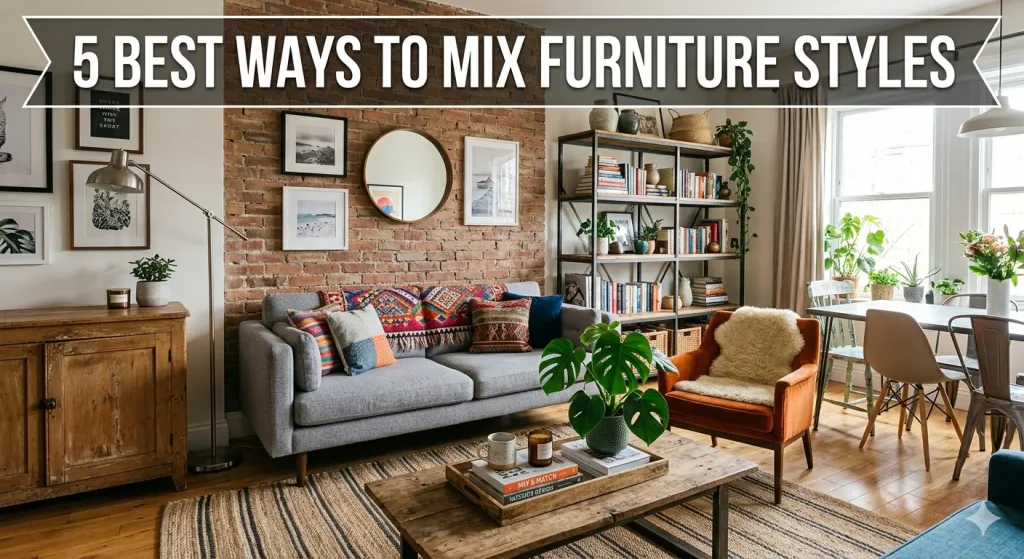
A common misunderstanding in interior design is that everything in your home has to “match.” Your mid-century contemporary sofa can coexist with your grandmother’s old cabinet. Your rustic farmhouse dining table can indeed be placed beneath a modern, sleek light fixture. That blending different designs of furniture will make things look messy.
The truth is the opposite of what you think.
The most beautiful rooms you’ve ever seen in a magazine almost certainly mix several forms of furniture. If you walk into a well-decorated living room, you’ll probably see a conversation between different styles, eras, and aesthetics. For example, a vintage rug can ground a modern sectional, industrial shelving can flank a traditional fireplace, or a bohemian accent chair can sit next to a clean-lined Scandinavian coffee table.
The secret isn’t to stay away from the mix. The key is to learn how to combine with confidence.
When done right, mixing different designs of furniture makes spaces that feel put together instead of forced, layered instead of messy, and very personal instead of generic. It narrates your personal journey, encompassing your past experiences, your origins, the evolution of your tastes over time, and your willingness to defy conventional norms to create a space that truly reflects your individuality.
However, blending different furniture designs can be intimidating. If you don’t have a plan, it’s simple to make a room that feels fragmented, unclear, or like a furniture store burst in your living area. It can be difficult to tell the difference between “eclectic and curated” and “random and messy.”
That’s why we made this whole guide. Here are the five best ways to expertly blend various furniture designs, complete with practical tips, real-life examples, and fundamental concepts that underpin the entire process. These tips can help you mix styles with purpose and style, whether you’re furnishing your first apartment, updating a family home, or just trying to fit an inherited piece into your current decor.
Let’s get started.
1. Find a Unifying Color Palette and Let It Be Your Anchor
Color is the one element that can either enhance or ruin a room with various styles. Color is what brings people together. It can make very different furniture types look like they belong together, as if they’ve always been in the same room.
Think of the colors you choose for your furniture as the language they communicate. A French provincial side table and a mid-century contemporary chair may not have anything in common in terms of structure, but if you cover the chair in soft cream linen and paint the side table a warm ivory, they will suddenly be having a friendly chat.
How to Make Your Unifying Palette
Begin with a base that isn’t too bright. Neutrals, such as whites, creams, beiges, grays, taupes, and blacks, don’t have a specific style. They don’t fit into any one design style or era, which makes them the perfect base for a room with a mix of styles. No matter what type they are, your biggest pieces of furniture (sofas, dining tables, bed frames, and significant storage units) will look better together if they are all in the same neutral color family.
Pick two or three colors to use as accents. After you’ve set up your neutral basis, choose a few accent colors and use them in different places around the space. For instance, if you want navy blue and mustard yellow to be your highlights, you could bring navy into your home with the throw pillows on your modern sofa, the upholstery on your vintage dining chairs, and the binding of books on your industrial bookcase. You might see mustard in a ceramic vase on your farmhouse console table or in the pattern of a boho area rug.
This repetition of hue provides the picture a sense of rhythm. When you look at things that have the same color, your brain naturally connects them. This makes the room appear planned, even if the designs are different.
Think about undertones. Many people often find themselves stuck in this area. If one piece of “white” furniture has cold blue undertones and the other has warm yellow overtones, they may not look appealing together. Be aware of whether your pieces lean warm or cool, and try to keep them in the same family of undertones. A room with just warm-toned woods, such as walnut, cherry, and oak, will feel more put together than one that mixes warm- and cool-toned woods without much thought.
Example from the Real World
Picture a living room with a modern charcoal gray sofa with a low profile and a pair of elaborate Victorian-style end tables painted matte white on either side. Next to the coffee table, which is made of reclaimed wood and has clean lines, is a Moroccan-style pouf in black and white. The throw pillows include both trendy geometric prints and classic damask patterns, but they all have the same charcoal, white, and soft blush color scheme. The space feels put together even though it has at least three different types of furniture since the color scheme is constant and planned.
Tip
If you’re uncertain, it’s best to choose a single color. A space that has only one color family, like different shades of blue or a spectrum of warm neutrals, may hold many different types of furniture without ever looking cluttered. Monochromatic schemes are one of the easiest ways to mix styles.
2. Use a Dominant Style as Your "Home Base" (The 80/20 Rule)
Trying to provide equal weight to all the styles in the space is one of the most common mistakes individuals make when blending furniture styles. They’ll put a modern, traditional, rustic, industrial, and bohemian piece in the same place, and each will be as loud as the others. What happened? Noise in pictures.
Designers typically name the answer the “80/20 rule.” One style should occupy 80% of the space, while the remaining 20% should be used for accent items from different styles.
Why This Works
A strong style provides the area a defined identity, like a “home base” that your eye can always go back to. It gives you a sense of purpose and structure. The accent pieces in various styles turn into intriguing plot twists in a novel that is generally easy to follow. They provide surprise, complexity, and individuality without changing the story of the room as a whole.
How to Use the 80/20 Rule
Pick your main style based on the biggest parts you have. The main pieces of furniture in your room, such as your sofa, dining table, bed frame, and storage furniture, usually set the tone. If your media cabinet and sofa are both modern pieces with clean lines and a minimalist look, then modern is your main style. You could then add a vintage Persian rug, a pair of traditional brass table lamps, or a rustic wooden stool as your 20% accent.
Let your accent pieces do the talking. Because there aren’t many accent pieces, they naturally catch the eye and become the center of attention. This is a wonderful chance to show off your most fascinating, one-of-a-kind, or sentimental furniture. That wooden chest you brought back from India? It looks wonderful in a bedroom that is generally Scandinavian-style. Is that the Art Deco vanity that belonged to your beloved aunt? In an otherwise modern bathroom, it really stands out.
Don’t be too strict about the percentages. The 80/20 rule is a suggestion, not a requirement. Some rooms operate excellently with a 70/30 or even a 60/40 split. The most important rule is that one style should obviously lead and the others should follow.
Example from the real world
Think of a modern farmhouse-style dining room with a big, solid wood trestle table, a built-in bench with linen cushions, and warm white shiplap walls. Now add the 20%: a pair of sleek, sculptural modern chairs at the ends of the table (maybe made of black metal and leather) and a dramatic modern chandelier with crisp geometric lines hanging from the ceiling. The farmhouse base gives the house warmth and stability, while the modern touches provide style and edge. The space is intriguing since the two styles clash with each other.
Tip of the Day
If you’re having trouble picking a dominant style, take a look at the architecture of your room. A traditional or transitional style perfectly suits a house with crown molding, arched doorways, and hardwood floors. If a loft has exposed brick, concrete floors, and big windows, it could look modern or industrial. It makes the whole process smoother and more natural to work with your architecture instead of against it.
3. Create Cohesion Through Shared Materials, Textures, and Finishes
- Materials and textures, along with color, are perhaps the best ways to make different designs of furniture look like they belong together. When separate items are made of the same material, such as wood, metal, glass, leather, or stone, they instantly seem like they belong together, even if they look and feel entirely unique.
The Strength of Repeating Material
Picture a room with a modern glass-top coffee table, a traditional wingback chair, and an industrial pipe-and-wood bookshelf. In terms of style, these three pieces have almost nothing in common. But now picture that the bookcase has walnut shelves, the wingback chair has walnut legs, and the coffee table has a foundation made of walnut. There is now a thread that runs through all three pieces and connects them. The walnut keeps coming up, which helps the room feel like one.
This principle works with any material: - Brass hardware on a traditional dresser is similar to the brass legs of a modern side table and the brass frame of an art deco mirror.
- Leather: The leather handles on the Scandinavian-style cabinet and the leather-wrapped barstools at the kitchen island match the rustic leather recliner.
- Natural fibers: The boho jute rug goes well with the rattan accent chair and the woven seagrass baskets on the farmhouse shelving unit.
- Marble: Modern marble bookends and a console with a marble top complement a traditional marble fireplace surround.
Texture as a Link
Texture operates in the same way. When different types of furniture have the same texture, like smooth and polished, rough and raw, or soft and fluffy, they seem more linked. Even though the styles are different, a room with smooth, polished surfaces (such as a lacquered modern coffee table, a polished classic mahogany desk, and a sleek contemporary light) will feel like one. Conversely, a room full of rough, natural textures (a reclaimed wood farmhouse table, a chunky knit bohemian throw, a raw-edge industrial shelf) will hang together beautifully because the textural language is consistent.
How to Use This Strategy
Check the materials in your current furniture. Before you buy anything new, take a look at the materials and finishes that are currently in your room. Look for new pieces made of wood with similar tones if you have a lot of warm-toned wood. If your home has a lot of black metal, look for accent items that include black metal accents.
Cut back on the metal finishes. This is a simple thing that makes a tremendous difference. In one room, try to use no more than two different metal finishes. Combining black metal and brass? Pretty. Putting brass, chrome, copper, nickel, and bronze all in the same place? Too much. One of the easiest ways to make a space with a mix of styles look polished and professional is to use the same metal finishes throughout.
Use fabrics to fill in the spaces. Throw cushions, curtains, rugs, and upholstery are all excellent ways to tie together furniture that doesn’t match. You may make a modern couch and a traditional armchair look like they go together by covering them both in the same linen fabric or in fabrics from the same material family that go well together.
Tip of the Day
Bring samples of the materials you want to buy when you are shopping for a new item that will fit into a space with many different styles. You can use a piece of your sofa fabric, a picture of the grain and color of your wood floor, or even a cabinet knob in the same metal finish as your other furniture to see if a new item will match what you currently have.
4. Balance Visual Weight and Scale Across Styles
This is the plan that makes the difference between amateur-style mixing and professional curation. The visual weight of a piece of furniture, or how hefty, imposing, or dominant it looks, is crucial for making a mixed-style space feel balanced or unbalanced.
Understanding how visual weight works
Visual weight doesn’t have anything to do with real pounds on a scale. It’s about how much attention a work attracts from the eye. Furniture that is dark in color feels heavier than furniture that is light in color. It feels heavier when items are solid and opaque than when they are open and airy. Big pieces of furniture feel heavier than small ones. Pieces with a lot of intricacy and decoration feel heavier than basic, streamlined ones.
When you blend diverse designs of furniture, you’re often putting together pieces that look very different from each other. A big, dark, carved traditional bookcase is very heavy to look at. A modern side table with a tiny wire frame has almost no weight. Putting them next to each other without thinking can make a room feel off-balance, with one part feeling heavy and another feeling light.
How to Make Visual Weight Equal
Put both heavy and light things throughout the room. Spread your heavy and light pieces apart instead of putting all the heavy ones on one side and all the light ones on the other. To balance a large classical armoire on one wall, place something of similar visual weight on the opposite wall. A big modern sofa or a set of industrial-style shelves might work.
Use pairs and symmetry in a smart way. When you put together pairs of matching things, they can help make a place feel more organized. Even something as simple as matching table lamps on either side of a bed or identical bookshelves on either side of a fireplace can provide a sense of balance that lets your mixed-style pieces live together in peace.
Know how things are sized in relation to each other. A small, fragile antique end table next to a big, heavy modern sofa can look like an afterthought or perhaps a mistake. Ensure that the sizes of your pieces work well together. The height and depth of the sofa’s arms should be in line with the end table. The size of the coffee table should be right for the chairs and couches around it. When the scale is right, style distinctions are much less obvious.
The “Test of Squint”
Here’s a useful tip that designers use: step back and squint at your room so that the details are fuzzy and all you perceive are forms, masses, and tonal values. Does the room seem even? Is the visual weight spread out evenly? Are there any parts that feel too heavy or too empty? This squint test takes away style identifiers so you can look at the pure composition, which is what makes a room feel harmonious in the end.
Example from the real world
Imagine a bedroom with a big, dark wood four-poster bed as the main component. This bed has a lot of visual weight. You may use lighter, more modern nightstands to balance things out. For example, you could choose open-frame metal and glass designs that let light through. A big, light-colored modern area rug under the bed helps the room seem more grounded without making it look heavier. A big, modern dresser in a lighter wood tone on the other wall balances off the bed’s weight. The room’s well-balanced visual weight creates a harmonious blend of old and new styles.
5. Connect Styles Through Era-Bridging "Transitional" Pieces
There are times when the difference between two designs of furniture seems too big to cross straight. Putting a very modern acrylic chair next to a cabinet from the Gothic revival period that is intricately carved can make the two pieces look very different from each other, even if they are the same color or material. Transitional pieces are particularly useful in this situation.
What do transitional pieces mean?
Transitional furniture is a mix of traditional and modern styles. These pieces usually have classic shapes with simple features, clean lines with subtle curves, and an overall sense of understated beauty that doesn’t perfectly fit into any one style or age. Imagine a couch with a traditional rolling arm that is covered in a modern, solid-color performance fabric. Or a dining table with classic proportions and a smooth, plain top.
In a room with several styles, transitional pieces help things flow. They make it easier to switch between more extreme styles without making the changes feel jarring.
How to Use Transitional Items
Put them between the elements that are most different from each other. If you have something very old-fashioned and something very new in the same space, put something in between them that is both old-fashioned and new, either literally or visually. The transitional element makes a gradient, which is like a stepping stone that allows your eye to navigate from one style to the next without being shocked.
Use them for the biggest pieces of furniture. Choosing transitional versions of big furniture like sofas, dining tables, and bed frames gives you the most options because these pieces set the tone for the whole area. A transitional sofa can look appealing with a rustic side table on one side and a sleek, modern floor light on the other. It may change to fit in with its neighbors while still being quiet and elegant.
Your carpets, drapes, and other fabrics can help you transition. A rug with a classic pattern in modern, muted hues is always in style. Curtains made of a traditional fabric in a modern colorway are a wonderful way to connect the two styles. These soft things are frequently the quickest and cheapest method to move from one kind of furniture to another.
What “Era Echoes” Means
You can also connect trends by discovering small echoes across different eras, in addition to transitional furniture. Look for design elements that are similar in both styles, including curves, angles, proportions, or patterns.
For instance, the tapered legs of a mid-century modern coffee table are similar to the tapered legs of many traditional pieces of furniture. The clean lines of Art Deco mirrors are similar to the clean lines of modern design. The flowing lines of Art Nouveau furniture and the organic curves of a modern sculptural chair are similar. When you uncover these echoes and put the pieces close together, the connection feels natural instead of forced.
Example from the real world
Contemplate a living area where you wish to mix modern and traditional styles. Instead of putting a raw steel industrial coffee table right in front of a traditional Chesterfield sofa (which could clash), you add transitional accents. The coffee table’s design becomes simpler. It might be an iron frame with a thick, polished wood top that pays homage to both industrial materials and traditional craftsmanship. The Chesterfield now comes in a modern gray velvet instead of the classic brown leather. On the side tables, there are two table lamps with bases shaped like urns, but their shapes are clean and simple. Each part has traces of both worlds, so they fit together perfectly instead of crashing into each other.
Bonus Tips for Successful Style Mixing
Here are some more tips to help you blend furniture better before we end:
Tell a tale. The best mixed-style spaces tell a story. Your tale may be “well-traveled collector,” which mixes pieces from around the world; “modern meets heirloom,” which mixes modern furniture with antiques passed down from family; or “urban rustic,” which mixes industrial and country styles. Having a loose story in mind can help you make decisions and give the area a feeling of purpose.
Be quite harsh when you edit. If styles clash or don’t complement each other, a room is more likely to be messy and confusing. Even if you love each piece, be willing to let go of things that don’t add to the overall harmony. A piece can be wonderful on its own but not fit in with the rest of the work. That’s OK. Give it a place in another room or let it go.
Add layers slowly. There’s no need to perfect your mixed-style space right away. The best eclectic rooms are frequently made over time, with pieces added here and there and pieces changed out, each one responding to and improving on what came before. Allow yourself to live in your space, see what works, and change how you do things.
Every room should have one element that ties it all together. Every space needs one powerful, confident piece that serves as the anchor. This is the first thing your eye goes to and then utilizes as a reference point for everything else. This may be a vibrant area rug, a statement sofa, a big piece of art, or a striking piece of furniture. Once you have established your anchor, everything else in the room can complement it.
Listen to your gut. Your home should be a reflection of you, not a textbook, a trend report, or someone else’s Instagram page. It works if a mix of styles makes you feel joyful, comfortable, and at home. Done. Design principles are tools to help you reach your goals, not strict rules.
Final Thoughts
Mixing different forms of furniture isn’t about being careless with design; it’s about being creative and purposeful. It’s about knowing that beauty can be found in differences, that harmony can come from a mix of things, and that the best rooms are the ones that surprise us with combinations that we didn’t expect but that feel just perfect.
You can combine various furniture styles in a room to create a cohesive, layered space that reflects your personal style. To do so, use a consistent color scheme, the 80/20 rule to set a dominant style, material and texture through-lines, and transitional pieces to fill in any gaps in style.
So go ahead and put that new, sleek lamp on your grandmother’s old dresser. Bring that old-fashioned bench over to your modern dining table. Let your boho textiles hang over your simple sofa. When you blend furniture types, you may adore what you love without feeling ashamed about it. You can also make your home as complex, changing, and gloriously different as you are.
Your house doesn’t have to match. It has to ring true. And when you learn how to blend different designs of furniture, it will do just that.
What do you like best about combining different styles of furniture? Do you like modern and old styles, industrial and classic styles, or something else entirely? Please tell us what you think and give us your own mixing recommendations. We’d love to hear how you’re putting your space together.