6 Smart Home Gadgets for 2026
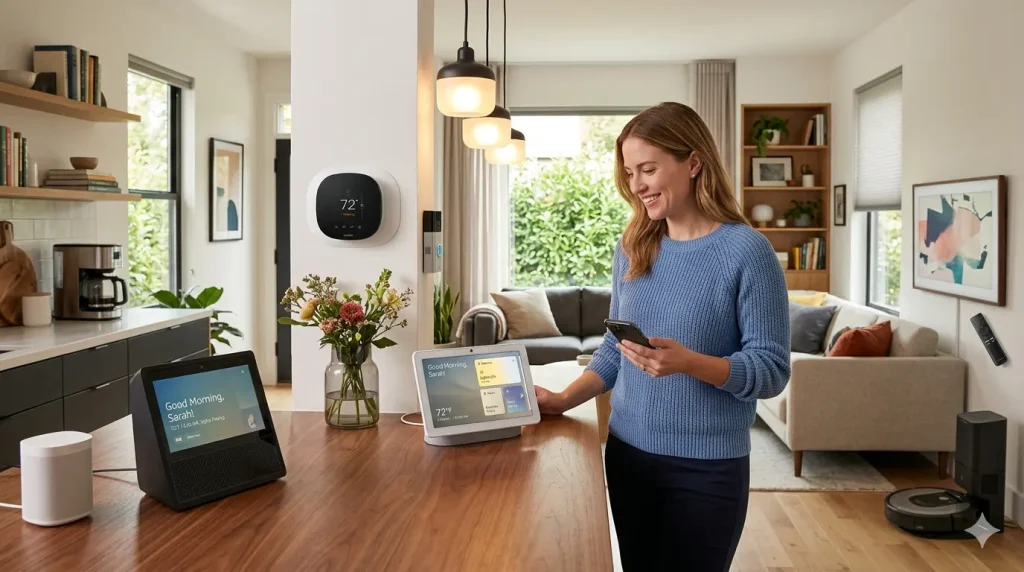
The smart home revolution is still going strong. In fact, it’s progressing at a pace that would have seemed unimaginable just five years ago. Looking ahead to 2026, a new generation of smart gadgets will change the way we think about comfort, safety, energy efficiency, and everyday convenience in ways that most homeowners haven’t even thought of yet.
In this in-depth guide, we look at six of the most fascinating and useful smart home gadgets that are likely to be very popular in 2026. We discuss the unique features of each gadget, their ideal users, and the reasons why you should consider incorporating them into your home.
Why 2026 Is a Pivotal Year for Smart Home Technology
Before we get into the details of individual devices, it’s important to know why 2026 is an important year in the history of smart homes.
First, Matter 2.0, the standard for connecting smart homes throughout the world, is finally ready. This means that gadgets made by different companies, like Google, Apple, Amazon, Samsung, or a little startup from Shenzhen, will finally be able to talk to each other without the annoying compatibility problems that early adopters had.
Second, AI on devices has reached a point of no return. Your smart home devices don’t have to send every piece of data to a faraway cloud server anymore. This is because edge processors are getting stronger and neural chips are getting smaller and more efficient. They think about what’s going on in their area. They answer more quickly. And they do a better job than ever of keeping your information safe.
Third, the expenses of energy and people’s awareness of the environment keep going up. Homeowners don’t just want cool tech; they want equipment that saves energy and is built to last.
Now that we know that, let’s look at the six smart home technologies that will have the most impact in 2026.
1. AI-Powered Whole-Home Energy Manager
What It Is
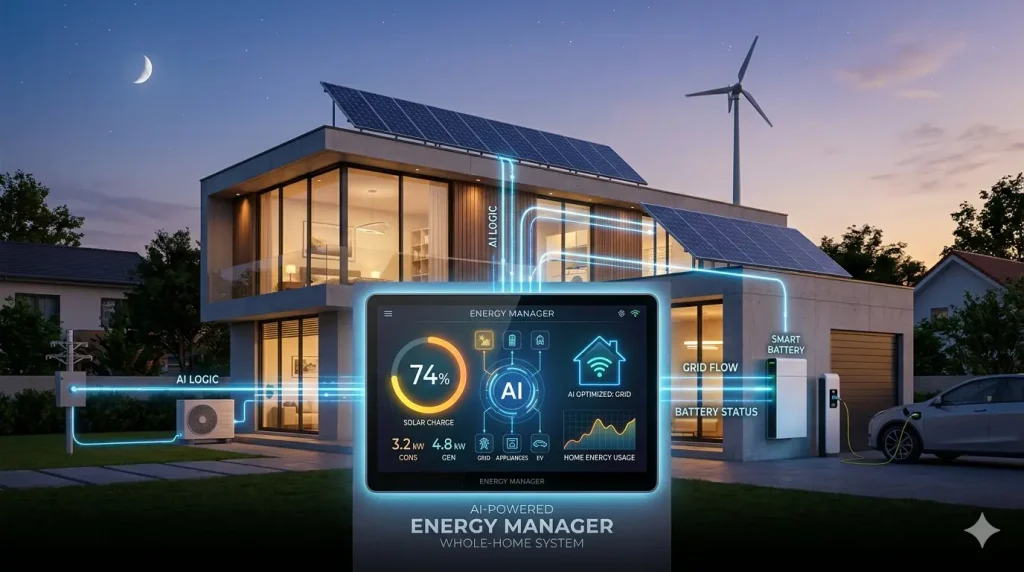
Picture a single device, about the size of a hardback book, next to your electrical panel that keeps an eye on, analyzes, and controls every watt of electricity that flows through your home. The concept is the whole-home AI energy manager, and in 2026, this type of product will be huge.
These new systems employ artificial intelligence to act on the information they get in real time, unlike basic smart plugs or simple energy monitors that only show you how much electricity you’re using. They figure out how your family uses energy by keeping track of things like when you wake up, go to work, run the dishwasher, and charge your electric vehicle. They then automatically adjust energy use to save money and cut down on waste.
How It Works
The device attaches directly to your house’s electrical panel (it’s best to have a professional install it) and employs current-sensing technology to find the unique electrical signature of each appliance and system in your home. It can tell the difference between your refrigerator’s compressor turning on, your HVAC system turning on, your teenager’s gaming PC draining electricity, and even a single lightbulb being left on in the basement after just a few days of machine learning.
After it learns your home’s energy fingerprint, the AI starts to make smart choices:
- Moving high electrical demands, such as charging electric vehicles and heating water, to times when electricity is cheaper.
- During times when energy rates are low, you can cool or heat your home ahead of time so that your HVAC doesn’t have to work as hard during times when rates are high.
- Letting you know about problems: a fast rise in power use could mean that an appliance is broken, a water heater is going to break, or even that there is an electrical safety problem.
- You can maximize the use of renewable energy and reduce your dependence on the grid by utilizing solar panels and home batteries.
Why It Matters in 2026
As time-of-use electricity pricing becomes more common and utility rates go up every year, households that start using AI energy management early can potentially save 20–35% on their yearly electricity expenses. If a family spends $200 a month on electricity, they can save $500 to $840 a year. Such savings means that the device pays for itself in the first year.
This device not only saves you money, but it also changes the way you think about energy: your home ceases being a passive consumer of energy and starts becoming an active, smart participant in the energy grid.
Best for People Who Own Solar Panels or Electric Cars, or Have High Electric Bills It’s also ideal for families who care about the environment and want to lower their carbon footprint without having to continually check their appliances.
2. Ambient Health-Monitoring Smart Mirror
What It Is
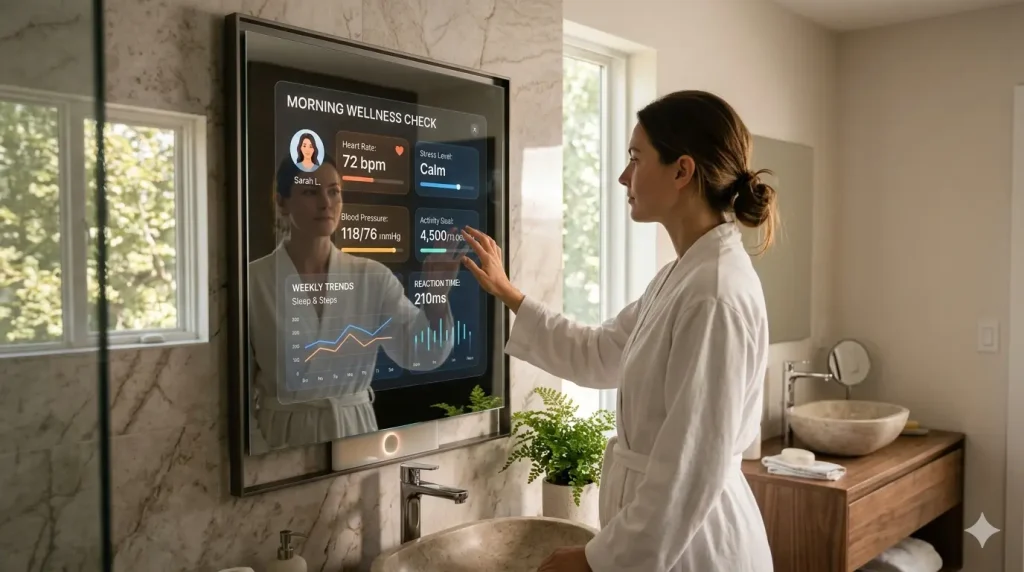
The idea of the smart mirror has been around for a long time. But in 2026, it will finally be practical. The mirror shows the weather and your calendar while you brush your teeth, and it also tracks your health.
These smart mirrors of the next generation can provide a rapid, non-invasive health scan in less than 60 seconds using a mix of built-in sensors, computer vision, and AI. In the morning, step in front of it, and in less than a minute, you can see your heart rate, breathing rate, blood oxygen level, stress level, skin condition, and even little changes in facial symmetry that could be signs of early health problems.
The Tech That Makes It Work
The mirror’s built-in camera employs remote photoplethysmography (rPPG) to find tiny changes in skin color that happen when blood flows beneath the surface. These color changes can’t be seen with the human eye, but advanced algorithms can pick them up and analyze them to get cardiovascular data without the need for a wearable device or direct contact.
Advanced facial recognition AI can also keep track of changes over time, such as weight changes that show up in the face, puffiness that could be a sign of water retention or allergies, changes in skin tone that could mean a lack of nutrients, and even mood estimation based on small facial expressions.
The mirror’s built-in processor handles all of this data. It is never sent to external servers unless you opt to share it with a healthcare provider.
Why It Matters in 2026
Today, people are beginning to take preventive health seriously. People don’t want to go to the doctor when they’re sick. They want health awareness to be a part of their daily lives without any effort on their part. A smart mirror does this because it doesn’t take any extra effort; you already stand in front of a mirror every morning.
This technology is especially useful for older parents who live on their own. If the mirror notices worrying tendencies, like a regularly high resting heart rate or symptoms of major weight loss, it can send messages to adult children. The information lets everyone know if anything is wrong and allows for earlier intervention.
Best For: People who care about their health, families with older members who live alone, and anyone who wants daily health information without having to wear a fitness tracker all the time.
3. Autonomous Indoor Air Quality Purifier and Regulator
What It Is
Indoor air quality has been one of the most talked-about health issues since the global epidemic, and for good reason. The EPA says that the air inside can be two to five times dirtier than the air outside. In 2026, a new type of smart air quality system will be much better than regular HEPA purifiers.
These smart devices can sense air quality, clean it, adjust humidity, and control ventilation all at the same time. Not only do they filter the air, but they also control the whole atmosphere in your home.
What Sets It Apart
Air purifiers that are more traditional sit in the corner and run their fans, pushing air through filters at a steady rate. The generation of 2026 is a lot smarter:
- Multi-sensor arrays may measure carbon dioxide levels, formaldehyde, humidity, temperature, and particulate matter (PM2.5 and PM10) all at the same time.
- Adaptive purification changes the speed of the fan, the filter’s engagement, and the ionization based on real-time assessments of the air quality. If someone starts cooking and VOC levels rise, the machine immediately ramps up its performance. When the air is clean and no one is home, it goes into a whisper-quiet standby mode to save electricity.
- It has built-in humidity control that keeps the relative humidity level between 40 and 60 percent, which is best for breathing, sleeping, and even keeping wooden furniture and musical instruments safe.
- When CO₂ levels rise, smart ventilation integration works with your HVAC system or a separate ERV (energy recovery ventilator) to bring in fresh air from outside without wasting heating or cooling energy.
- Air quality mapping: If you have more than one unit or sensor in different rooms, the system makes a real-time map of the air quality in your whole home and shows you which areas need the most attention.
Why It Matters in 2026
The air inside your house isn’t just a comfort issue anymore. It’s also a health and productivity concern as wildfires happen more often, pollution in cities gets worse in many places, and more people work from home full-time. Studies have consistently shown that high levels of CO₂ (which are typical in home offices that aren’t well aired) make it much harder for people to think clearly. These systems might actually help you think more clearly by keeping the air inside your home at its best.
Furthermore, autonomous air quality management is not a luxury, but a necessity for individuals with allergies, families with small children, and those with weak immune systems.
Best For: People who work from home, those with allergies or asthma, families with children, individuals living in areas prone to wildfires or significant outdoor pollution, and homeowners seeking to live in healthy environments.
4. AI Security Camera with Predictive Threat Detection
What it is
It’s not new to have security cameras in your home. But the 2026 generation is a big step forward since it goes from reactive surveillance (“recording what happened”) to predictive security (“alerting you before something happens”).
These cameras use cutting-edge computer vision AI that can do more than just tell what people and things are. It can also grasp behavior, context, and intent. The difference is life-changing.
How Predictive Detection Works
Smart cameras that are not new can tell you, “There’s a person at your front door.” An excellent one can even tell you if the person is a stranger or a family member. But the 2026 predictive cameras go far deeper:
- Pattern analysis: The camera learns how people usually act near your house. At 2 PM, the mailman comes. Your neighbor walks their dog by your house at seven in the morning. Children ride their bikes on the sidewalk after school. Once these patterns are set, the AI can identify real problems, like someone hanging around your garage door for a long period, a car going around your block over and over, or someone coming up to your back gate at 3 AM.
- Intent estimation: The AI can tell the difference between a delivery driver strolling purposefully to your porch and a stranger who seems like they’re casing the house by examining windows, testing door handles, or acting suspiciously.
- Before an incident happens, the system sends you an alert when it sees suspicious behavior. This gives you time to turn on lights, set off an alarm, or call the police before anything dangerous happens.
- Vehicle recognition: The AI can tell what kind of car it is, what color it is, and even how it drives (like a car that slows down in front of your house on different days).
Things to think about when it comes to privacy. - The focus on privacy-first processing is one of the most crucial changes in security cameras in 2026. There is no video footage uploaded to cloud servers for processing; all AI analysis happens on the device itself or on a local hub. You have full control over your data. Many models also automatically mask the faces of those who aren’t recognized as important, which helps ease worries about neighborhood surveillance going too far.
Why It Matters in 2026
Theft of packages, break-ins, and property crime are still big problems. But the psychological value of anticipating security is perhaps greater. It gives you a whole new level of peace of mind to know that your home’s security system is actively looking for hazards instead of merely recording them. It changes your security camera from a tool for solving crimes to a tool for stopping them.Best For: Homeowners in any neighborhood, families who travel frequently, people who receive expensive deliveries, and anyone who wants protection that is effective before something bad happens rather than after it occurs.
5. Smart Water Management System
What It Is
Water is becoming a costly resource in many places, but most homeowners don’t know how they use it. A clever water management system makes that entirely different.
This gadget is installed on the main water line of your home and employs ultrasonic flow sensing to keep an eye on every drop of water that moves through your plumbing in real time. But it does a lot more than just keep track of use; it also provides features such as leak detection and automated shutoff to prevent water waste and damage.
Important Features
- Leak detection and automated shutoff: The system may find leaks as little as one drip per minute by looking for unusual flow patterns. If it thinks there might be a pipe burst or a big leak, it can turn off the main water valve in seconds. Such a system could save you tens of thousands of dollars in water damage, which is still the most common and expensive claim for homeowners insurance.
- Analytics for usage: You can see how much water each activity uses—showers, laundry, irrigation, and dishwashing—broken out by day of the week and time of day. The AI learns your habits and can find ways to save money (“Your irrigation system ran for 45 minutes yesterday, but it rained for two hours that afternoon”).
Fixture-level - Identification: Just like energy monitors can tell one appliance from another, modern water monitors can tell one fixture from another by looking at its distinctive flow signature. This feature means you can tell that the toilet in your guest bathroom is running off and on, which is a frequent silent leak that can waste thousands of gallons of water each year.
- Water quality monitoring: Some 2026 models have inline water quality sensors that keep an eye on hardness, chlorine levels, TDS (total dissolved solids), and temperature. If any of these change, it will inform you that there may be plumbing problems or contamination.
- Smart irrigation integration: The system talks to your outdoor sprinkler system and uses weather forecasts, soil moisture data, and the needs of your plants during different seasons to automatically set the best watering schedules.
Why It Matters in 2026.
In almost every city, the cost of water is going up. Droughts are happening more often across bigger areas. And water damage is still costly; the typical insurance claim for water damage in the US is more than $12,000.
A smart water management system solves all three problems at once: it cuts down on waste, stops giant leaks, and provides households an unprecedented look at a resource they’ve always used without thinking about it.
Best For: People who own homes in locations that are prone to drought, people who have had plumbing problems in the past, vacation property owners who are worried about leaks that aren’t found, and families that care about the environment and want to waste less water.
6. Context-Aware Smart Lighting Ecosystem
What It Is
Smart bulbs have been around for more than ten years. But by 2026, the idea of “smart lighting” has grown into something much more advanced: a lighting system that knows what you’re doing, how you’re feeling, and what kind of light you need at any given time, and it changes itself without you having to touch a switch or open an app.
More than just color and dimming
It was exciting to be able to change colors and dim lights with your phone when smart lighting first came out. That new thing got old fast. The 2026 progression revolves around a significant advancement: lighting that adapts biologically and responds to its environment.
This is what the system looks like in real life:
- Circadian rhythm alignment: The lighting system automatically changes color temperature throughout the day. In the morning, it gives you cool, stimulating blue-white light to help you wake up and focus. In the evening, it warms up to golden tones to assist your body in making more melatonin and sleeping better. The system doesn’t just use a timer; it changes based on when you get up, how much light you get, and what you do every day.
- Activity recognition: The system uses data from room sensors (motion, presence, ambient light, and sound) to figure out what’s going on in each room and make changes as needed. Is there a movie commencing in the living room? The lights automatically decrease to a mellow amber glow. Are the kids doing their homework at the kitchen table? The light from above becomes brighter and changes to a cool white that helps you see better. Is someone coming into the restroom at 2 AM? A soft, low-level warm light shows you the path without waking you up.
- Occupancy-based efficiency means that lights switch off in rooms that are really vacant. This task is done via presence recognition, not just motion, so the lights won’t turn out while you’re quietly reading on the couch. This feature alone can cut down on the energy used by lighting by 30% to 40%.
- Mood and wellness integration: The lighting can respond to biometric cues when it is connected to other smart home devices, such as the air quality system or health-monitoring mirror discussed above. Is there a lot of stress? The illumination slowly changes to pleasant, relaxing colors. Do you feel worn out in the afternoon? A small increase in brightness and a cooler color temperature might give you a natural boost of energy.
- Dynamic scene creation: Instead of having to set up static “scenes” by hand, the AI makes lighting environments that change naturally over the night, like a real sunset that gets darker as sleep gets closer.
- The Evolution of Hardware
The lights themselves have also changed. Smart bulbs and fixtures from 2026 have a larger range of color temperatures (1800K to 6500K), greater CRI (Color Rendering Index) values exceeding 95 for light that looks more natural, and they last a lot longer. Many products at the fixture level now come with the smart controller built in, so there is no need for extra hubs or bridges.
Why it matters in 2026
Light is one of the most important things in the environment that can affect people’s health, mood, productivity, and sleep. Still, most people work and live under static, one-size-fits-all lighting that doesn’t take into account the body’s basic needs, such as the natural circadian rhythms that influence sleep and alertness throughout the day. Smart lighting that knows what’s going on in your home doesn’t just make it look better; it also makes you feel better, sleep better, and work better. You can never go back after you experience this upgrading.
Best for Everyone. Context-aware lighting is one of the best smart home modifications you can make, whether you want to sleep better, be more productive when you work from home, save energy, or just enjoy a home that always seems ideally lit.
How to Approach Smart Home Upgrades in 2026
Here are some useful recommendations for making sensible buying choices, based on these six types of gadgets:
Begin with the thing that hurts the most. Don’t try to make your whole house smart all at once. Start with the energy manager if your electricity bill is too high. Start with the predictive camera if you’re worried about safety. First, resolve the problem that is most important to you.
Put Matter-compatible gadgets at the top of your list. No matter what brand your devices are, the Matter standard makes sure they will work together and stay compatible with new items. In the world of smart homes, it’s the closest thing to a guarantee that it will last.
For privacy, think local first. In 2026, there is no reason for smart home devices to need cloud processing to work. Look for items that can process data on the device itself or on a local hub. Your home data should stay at home.
Think about the whole ecosystem, not just one product. It’s not any one device that makes a smart home magical; it’s how they all operate together. That’s where the real value comes in: your air quality system talking to your HVAC, your lighting system reacting to the data from your health mirror, and your energy management working with your water system.
Don’t forget about the quality of the installation. Professional installation is typically needed for things like energy managers and water management systems. Plan for it. It’s better to not have a smart device at all than to have one that’s set up wrong.
Final Thoughts: The Smart Home of 2026 Is Quietly Revolutionary
The most intriguing thing about these six devices is not how flashy they are, but how useful they are without making a lot of noise. In 2026, the best smart home technology won’t need your attention. You don’t have to keep messing with apps or yelling at voice assistants. Instead, it quietly makes your home healthier, safer, more efficient, and more comfortable while fading into the background of daily life.
The real promise of the smart home is not a house full of gadgets, but a home that really looks out for you.
Having more technology in your home isn’t the future. It’s about having the proper technology: smart, not annoying, and very in tune with how you really live, which means it should seamlessly integrate into your daily routines and enhance your quality of life without causing distractions.
Hello, 2026. Your house is getting smarter. And this time, it really does matter.
Did you find this guide helpful? Give it to someone who is considering improving their home in 2026. And if you’ve previously used any of these technologies, please tell us about your experience in the comments. We’d love to know how they work in real houses.