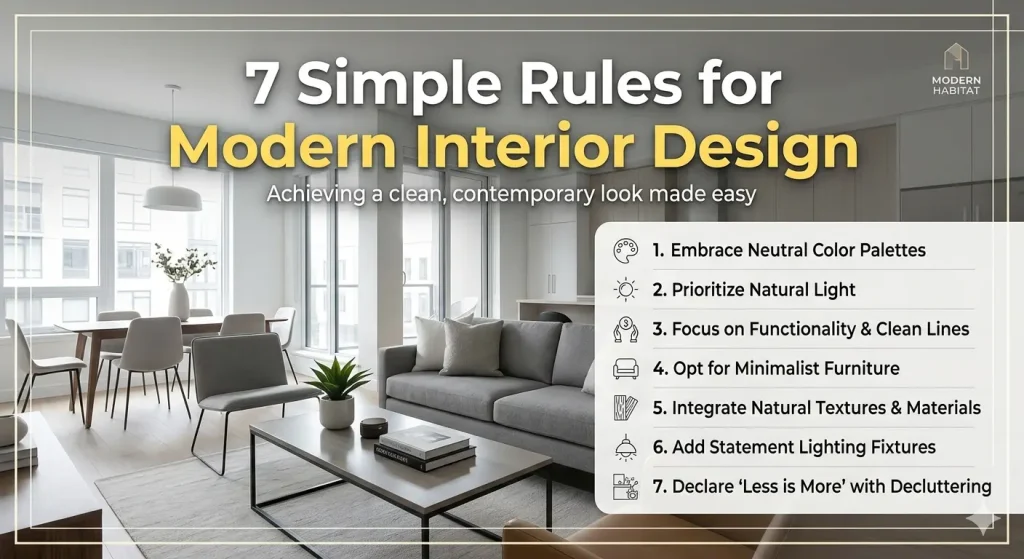
7 Simple Rules for Modern Interior Design
After years of reading interior design magazines, watching home makeover shows, and yes, making a lot of decorating mistakes in my home, I’ve learned that modern interior design isn’t about following strict rules or making a space that looks perfect but doesn’t feel like anyone lives there.
It’s about creating a home that truly reflects your personality while incorporating ideas that enhance functionality, aesthetics, and comfort. Have you ever experienced that feeling when you enter a room and everything just falls into place?? That’s what we want.
Modern interior design is beautiful since everybody can use it. You don’t need a lot of money, a degree in design, or even a “good eye” (whatever that implies). You need to know some basic rules and be sure that you can use them in your own way.
So fetch your coffee, sit comfortably, and let’s look at seven simple rules that will change how you think about your home.
Rule #1: Embrace the "Less Is More" Philosophy (But Make It Personal)
People have completely misread minimalism in modern design. People think of those empty white spaces with only one chair and maybe one piece of abstract art when they hear “less is more.” That’s not the essence of modern design, to be honest. Those rooms look frigid and unwelcoming.
Modern interior design certainly favors simplicity, but it’s about planned simplicity. Everything in your environment should have a reason for being there. Think about whether the item is useful. Does it make me joyful? Does it say something about me?
When I moved into my first apartment, I learned this lesson the difficult way. I put things in it that I believed I should have, including ornamental goods, “adult” furniture, and art that matched but didn’t signify anything to me. Although the pictures made the place look appealing, living there felt like a trap. Everything was trying to catch my attention.
It was remarkable how significantly my circumstances improved once I eliminated everything that was inconsequential. Suddenly, my grandmother’s old lamp took center stage. The three vacation photos I really liked (instead of the fifteen generic ones) said something authentic. Finally, the space could breathe, and so could I.
How to use it: Start with one room. Get rid of anything that doesn’t have a clear purpose or real meaning. Yes, it will feel strange at first. But wait a week. Look how much calmer you feel. If you want to add things back, do it slowly and on purpose.
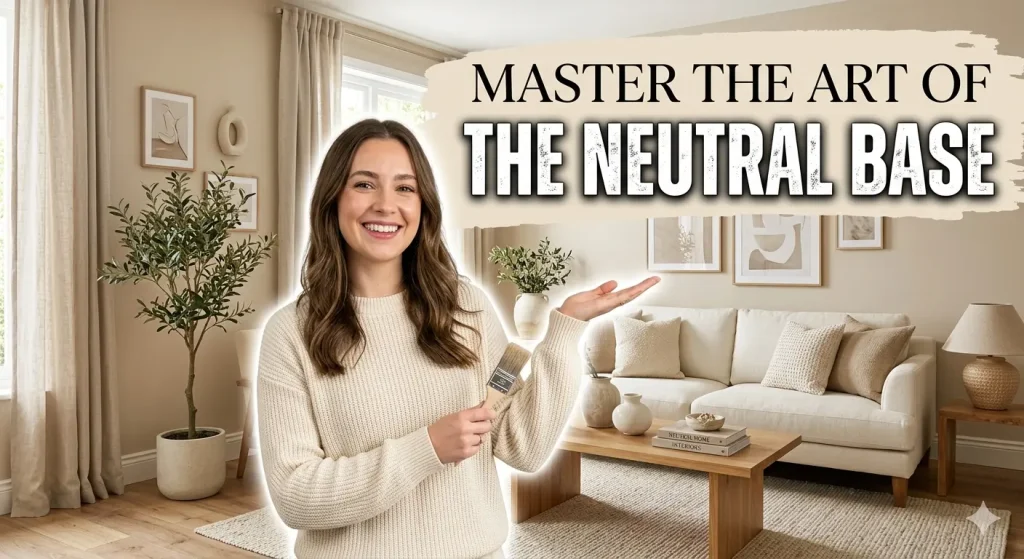
Rule #2: Master the Art of the Neutral Base
I get it, I get it. You already know the basics. But stay with me because every interior designer keeps saying this for a reason: it works.
Think of neutral hues as the base of your home, like a wonderful pair of pants. They look well with everything, never go out of style, and make everything else seem better when you wear them.
But here’s the important part: neutral doesn’t mean dull beige. The neutral color scheme has changed a lot. We’re talking about warm whites, soft grays, greiges (a lovely gray-beige mix), taupes, warm browns, and even muted terracottas and sage greens.
The key lies in blending and contrasting various shades and textures of neutrals. On paper, a room featuring white walls, a cream sofa, beige curtains, and tan pillows may appear unremarkable, correct? But if you add diverse textures, like a chunky knit throw, smooth leather, nubby linen, or soft velvet, you achieve depth, warmth, and a lot of visual intrigue.
I remember talking to a woman who was dead set on having “color everywhere.” Her home was filled with vibrant colors and patterns that clashed, leaving her puzzled as to why it appeared so chaotic. We didn’t eliminate rid of color completely, but we did start with a neutral base. We painted the walls a soft gray color, added a cream sofa, and incorporated natural wood tones. Then we added her favorite colors with things that were easy to change, including pillows, throws, art, and plants.
What happened? Finally, there was room for her vibrant items to shine. And when she got sick of the bright orange cushions, she could just change them out without having to paint everything over.
For practical purposes, pick one neutral color to use as your main base (walls, big pieces of furniture). Pick one or two neutral colors that go well with the main ones. Add texture to your neutral palette to make it more intriguing. Use brighter colors for things you can quickly change.
Rule #3: Let Natural Light Be Your Best Friend
This guideline could change your life the most, and it doesn’t cost anything.
Everything changes as the sun comes out. It makes rooms feel more alive, colors look more real, and spaces feel bigger. Modern home design is preoccupied with natural light for a beneficial reason: it makes us feel joyful.
But a lot of us ruin our natural light without even knowing it. Heavy curtains that stay closed, furniture that blocks windows, and dark wall colors that absorb light instead of reflecting it may all make a room with big windows feel like a cave.
The current approach is to maximize the use of any available natural light. If you have big windows, don’t hide them. Use sheer drapes or blinds that let light in yet still give you privacy. During the day, try to keep windows clear if you can.
Utilize design techniques to maximize the potential of rooms that lack abundant natural light. Mirrors that are next to or across from windows will reflect light around the room. Glossy finishes, glass, and metals are examples of light, reflective surfaces that perform the same thing. The colors of the paint are also important. Cooler whites and pale grays reflect more light than warmer creams.
For three years, I lived in a north-facing apartment, and at first, the lack of direct sunshine made me sad. However, I became increasingly focused on maximizing the available light. I painted the walls a delicate white with cool undertones, hung a big mirror across from the window, chose furniture with glass and lucite parts, and kept the window coverings simple. Did it become a bright, sunny place? No. But everything felt much brighter and nicer.
Practical use: Check how much natural light each space gets. During the day, take down any window coverings that aren’t needed. Think about replacing heavy curtains with lighter ones. Place mirrors strategically. When you paint, pick colors that reflect light instead of absorbing it.
Rule #4: Invest in Quality Over Quantity
This is where current interior design differs from the fast-fashion style of decorating homes. You know the stores I’m talking about, where you can buy everything you need for an apartment for less than $1,000. It’s hard to resist, especially when you’re just starting out or don’t have a lot of money.
But the truth is that buying cheap furniture and decorations that you’ll have to replace in a year or two is actually pricier in the long run. Furthermore, it adds to waste, and these pieces don’t usually look or feel nice in your home.
The current design philosophy says that you should put more thought into buying fewer, better things. Not everything has to be designed or cost a lot of money. It requires being smart about how you spend your money.
Buy the things you’ll use every day and that make up the base of your space: a comfortable sofa, a supportive mattress, a strong dining table, and good lighting. These things should last you at least ten years.
Save money on trendy goods, ornamental stuff, and things you might want to change as your style changes. That patterned throw pillow that is so popular? Sure, go with the cheaper one. But that couch you’ll sit on every day for years? It’s worth saving up for.
When I was in my twenties, I bought a cheap couch because I wanted it right away. The fabric became pilled; it began to sag after six months, and I found it unappealing to look at. I disposed of it two years later and purchased a higher-quality couch that was three times the price. It was eight years ago, and I still love it. How much does it cost to use? Totally worth it.
Usefulness: Write down what furniture you need. Find out which items you need every day and which ones you don’t. Look for reputable brands that fit your budget for the things you need, even if it means saving up for longer. You can be more careful with your money for everything else. You can discover excellent prices on well-made furniture if you buy it second-hand or vintage.
Rule #5: Create Functional Zones (Even in Small Spaces)
Our dwellings need to be able to do many things, much like modern life. We work from home, work out in our living rooms, and hang out in our kitchens. Even if you don’t have a lot of space, the most important thing is to make separate areas for different hobbies.
“Space planning” is the name of this principle. It is what makes some settings work while others seem awkward and unclear, as effective space planning can enhance functionality and comfort in a room.
Think about how you really use each room. You could need to watch TV, read, work on your laptop, and have company over in your living room. That’s a lot of things to do! Making small areas for each activity makes the environment more comfortable.
You don’t need walls or big divisions. Use furniture to mark off areas. An area rug can help define a location for talking. A bookcase can separate a place to work from a place to relax. Different types of lighting in different areas show what they are for. For example, use task lighting in your work area and softer lighting in your relaxation area.
I use a bookcase to separate my desk area from the sleeping area of my home office/guest room. My workstation, task lighting, and storage are all on the office side. There is a bed, a reading lamp, and a small nightstand on the guest side. It’s one room, but it works for two very distinct things without feeling crowded or confused.
This rule is even more important for people who live in small rooms or studio apartments. Your bed might have to share space with your living room, but putting it in a corner and using a room divider or tall plant to separate it slightly might make it feel like there are two separate areas for sleeping and living.
Practical use: Make a map of how you really use each room in your house. Determine the essential functions of each room. Use furniture placement, carpets, lighting, and small separators to make areas for each activity. Make sure that each area has everything it needs to work well, like the right amount of light and storage.
Rule #6: Mix Old and New, High and Low
This is where your space starts to feel like that of a genuine person. It will always feel flat and impersonal in a room if everything comes from the same store, the same time, or the same price range. It will feel more like a showroom than a home.
When you mix old and new, designer and budget-friendly, and inherited items with new ones, that’s when the magic happens. A truly lived-in and sophisticated design, acquired over time, is what this layered style creates.
That credenza from an antique store in the middle of the century? It looks excellent with a modern sofa. That old mirror from your grandmother? Looks wonderful on top of a sleek, modern console table. A stylish light fixture that’s worth the money? It’s even nicer when it lights up a room with things that are easy on the wallet.
This way of doing things is also useful in real life. It’s better for your wallet (you can mix in cheap pieces), better for the environment (you’re giving old things new life), and more unique (no one else will have the same mixture).
However, the key is to find a way to connect everything. This is where Rule #2, your neutral base, comes in handy. If you have a good color scheme, you can mix styles and eras that are completely unique.
I’ve been collecting things for my home for years. I received some items as heirlooms, purchased others from thrift stores, and saved up for significant acquisitions. My dining room table is an ancient mid-century piece, my chairs are modern copies, my light fixture is a new designer piece, and my grandmother’s china cabinet binds everything together. There are different styles and prices, but they all work together because the wood tones go well with each other and the color scheme is consistent.
Practical advice: Make a list of everything you already own, even things you’ve inherited or bought secondhand. Just because something is old doesn’t mean you should throw it away. When you are shopping for new things, think about adding some old or antique goods from thrift stores, estate sales, or internet markets. Put together elements that are worth the money with ones that are cheap. Just make sure that everything has a common aspect, such as color scheme, substance, or style.
Rule #7: Bring the Outside In
This last guideline is about making connections—to nature, the seasons, and the world outside our walls. And there is a lot of data to back it up. Studies have regularly shown that adding natural elements to our homes lowers stress, improves the air, lifts our spirits, and even makes us more creative.
Biophilic design, or integrating our living environments with nature, is a big part of modern interior design. And it’s more than just putting a houseplant in the corner (though that’s a good start).
You might choose to use natural materials like wood, stone, rattan, jute, linen, and wool. These materials add warmth, texture, and a natural feel that synthetic materials can’t match. A wooden coffee table, stone coasters, a jute rug, and linen drapes are all excellent alternatives that make a room feel more homey.
Plants are the most obvious way to bring nature inside, and for good reason. They are living, changing things that bring color, improve the air, and make things look captivating. If you lack gardening skills, there’s no need to worry. There are several plants that are almost impossible to kill, like pothos, snake plants, and ZZ plants.
But don’t limit your thinking to just plants and similar items. Maximize your enjoyment of the outdoor views. Use light from outside (Rule #3). Pick colors that are inspired by nature, including the delicate greens of foliage, the warm browns of wood, and the blues of the sky and ocean.
I didn’t mean to become a plant person. I bought home one pothos plant, and it did really well. Then one more. I have plants in every area now, and the change is wonderful. My space feels more like a sanctuary, more lively, and more tranquil. My indoor jungle tells me that life goes on, even in the winter when everything outside is gray and dead.
Put plants in your space. If you’re nervous, start with plants that are easy to care for. Use natural materials in your furniture, fabrics, and other items. Pick a color scheme that includes colors that come from nature. If you can, position the furnishings such that you can see outside. Consider using natural things like a bowl of river stones, driftwood, or fresh flowers.
Bringing It All Together
The best part about these seven guidelines is that they work together to improve things. When combined, they create useful, peaceful, and personal spaces.
You don’t have to do everything at once. Actually, I would advise against it. It’s not a one-time project to design the inside of a house. Begin with the rule that resonates most with you or addresses your most significant challenge.
Do you live in a messy, crowded space? Rule #1 is to get rid of things you don’t need, such as broken items, duplicates, or things that no longer serve a purpose in your life. Do you think your home doesn’t have any character? Go to Rule #6 and start blending the old with the new. Are you having trouble with a dark, dreary room? Your starting point is Rule #3.
Not aiming for perfection. It’s not necessary to make a room that appears like it belongs in a magazine (though that’s a lovely bonus). The idea is to design a home that fits how you really live. It should be pretty enough to make you smile and useful enough to fit your real life.
I’ve discovered that the best interiors change over time. They adapt with you, as you find new pieces that speak to you and as your requirements alter. Let yourself try new things, make mistakes, and change your mind.
Your home should be a safe place, a place to start new things, a place to be creative, and a place to rest. These seven rules are just tools to help you make that space more purposeful.
So get going now. Pick one rule. Do one thing. It could mean getting rid of ten things that don’t help you. Maybe it’s finally putting up those curtains to make your windows seem appealing. This could involve getting that plant you’ve been wanting or rearranging your furniture to improve the flow of the space.
Regardless of your choice, remember that modern interior design is not about strictly adhering to regulations. It’s about making places that feel good to you—places that are well-planned, have personal value, and are easy to live in.
The ideal interior design is the kind that makes you want to come home at the end of the day.