7 Stunning Master Bedroom Layouts
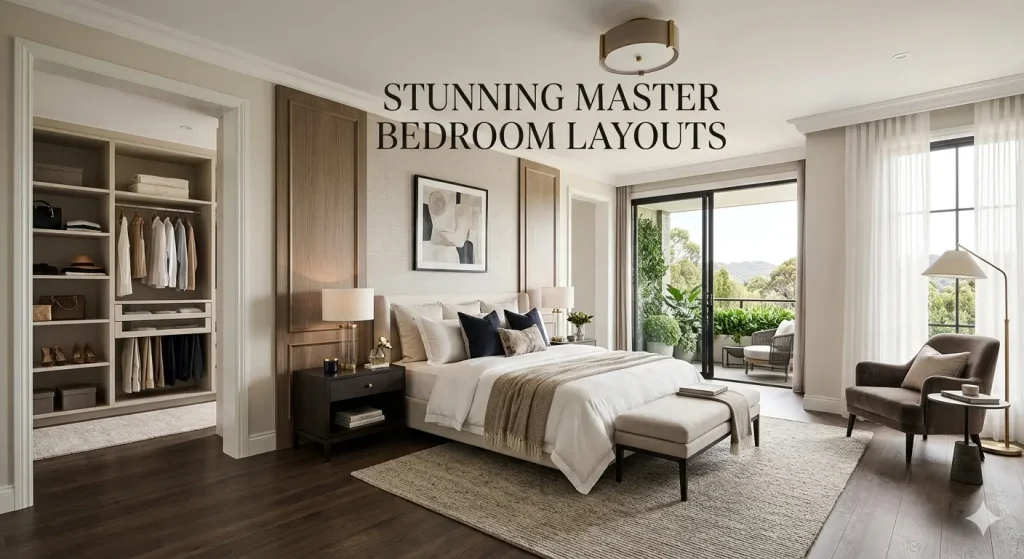
Can I ask you something? When was the last time you walked into your master bedroom and thought, “Wow, this room really works”?
Most likely, the answer is never. And to be honest, that’s not your fault.
We spend hours worrying about the colors of the paint in the living room and the backsplashes in the kitchen, but when it comes to the bedroom, where we spend a third of our life, most of us simply place the bed against a wall, add a couple of nightstands, and leave it at that. We often hang a mirror. Maybe we don’t. The furniture goes where it fits. The reading chair is in the corner, where it collects laundry.
Does this scenario sound familiar?
But here’s the deal. Your master bedroom’s layout has an effect on everything. How well you sleep. How calm you feel when you arrive home after a challenging day. How well the space works when you get ready at 6 AM and your mate is still sleeping. Consider how your relationship is influenced by the atmosphere of that space.
A superb master bedroom arrangement doesn’t have to follow a strict set of rules on how to decorate. It’s about knowing how you really utilize the area and then setting things up such that the space works for you in real life, not like some Pinterest vision that falls apart as soon as Monday morning comes around.
Let’s get started. Here are seven real master bedroom layouts that work, along with the real advantages and cons of each one. This will help you decide which one is best for you.
1. The Classic Symmetrical Layout
Best for: bedrooms that are medium to large and have a wall that stands out
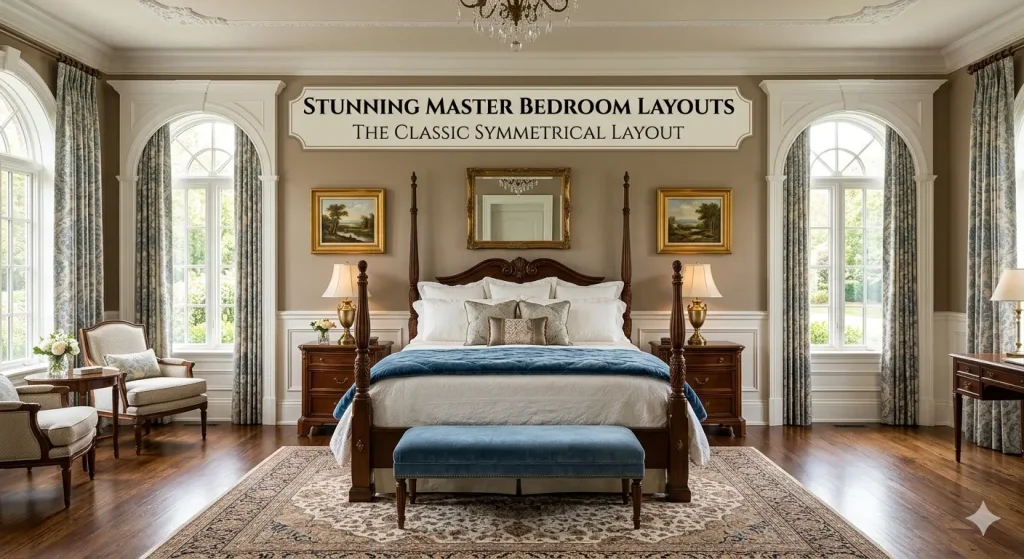
When someone says “master bedroom,” this is generally what you think of. The bed is in the middle of the main wall, with identical nightstands on either side. A dresser or media cabinet should go on the other wall. There could be a bench at the foot of the bed. Everything is neat, clean, and in order.
And you know what? This layout has been around for a long time for a reason. It works.
The brain accomplishes something amazing with symmetry. It means order, peace, and stability, which are the feelings you desire in a bedroom. When you walk in and everything is in order, you almost subconsciously breathe out. Things seem to be going well.
How to make it work:
First, find the wall that will be the focus. This is usually the first wall you see when you enter the room or the longest wall without breaks. Put your bed in the middle of that wall. Choose nightstands that are the right size for your bed. They don’t have to be exactly the same, but they should be near to the height of your mattress.
Put your dresser or a long, low console on the other wall. If you have a TV in your bedroom, it should go on the screen.
The most important thing about this layout is the right proportions. Little nightstands will appear incongruous next to a king-sized bed. Big furniture will make a small room feel claustrophobic and stuffy.
People often forget about the path. To move around comfortably, you need at least 24 inches of space on either side of the bed. 30 to 36 inches is the best range. If a centered bed doesn’t work, this layout may not fit your room.
2. The Corner Bed Layout
Best for: Small bedrooms or rooms with windows that are hard to get to
I get what you’re thinking. You probably did this arrangement in your first apartment, not in your master bedroom. But listen to me: putting a bed in the corner on purpose might be really smart.
This arrangement is ideal for smaller master bedrooms when putting the bed in the middle would take up all the floor space. You may make a lot of space by pushing one side of the bed against a wall. This space can be utilized for a desk, a reading corner, or just to breathe.
It’s also a beneficial option for bedrooms with multiple windows or doors that make bed placement difficult.
How to make it work:
The key is to make it look like you want to do it instead of having to. Use a big headboard that goes all the way up the wall. Put a nightstand on the open side. If someone is sleeping against the wall, think about putting a little shelf or sconce on the wall so they don’t seem like an afterthought.
Put many layers on your bedding. A thin comforter and one sad cushion on a corner bed scream “dorm room.” A corner bed with layers of texture, throw pillows, and a warm blanket at the foot? That appears like a decision in design.
The reality is that making the bed becomes more challenging when one side is positioned against the wall. If two people sleep in the same bed, the person on the wall side has to climb over or move to the end. For some couples, the wall position is a dealbreaker. For some people, especially those who are comfortable sleeping next to someone else, this arrangement is not a big deal.
3. The Floating Bed Layout
Best for: bedrooms that are big yet feel empty or cavernous
Some master bedrooms are so big that they are nearly too huge. I know that sounds like an issue that only rich people have, but if you’ve ever lived in a house with a huge master suite, you know how challenging it is. The room can feel cold and unwelcoming, like sleeping in a hotel lobby.
A floating bed arrangement resolves the problem by moving the bed away from the wall and into the room. The bed becomes an island, with room behind it that may be used as a hallway, a place to get dressed, or even a small home office.
How to make it work:
You need a headboard that seems heavy, such as a tall or upholstered one that can hold the bed in the middle of the room without making it look like you gave up halfway through the transfer. A solid wood headboard or an upholstered panel that goes from the floor to the ceiling looks well here.
You can put a desk, a console table, or a little bookcase behind the bed. This arrangement makes a natural barrier between the sleeping area and the area behind it. This method originates from studio apartment living, but it has been adapted for larger rooms.
Ensure that the area around the floating bed is clear and purposeful. This layout works best when the bed feels like a place to go in the room, like you’re walking to a retreat.
People don’t think about electrical outlets very often. You might need an electrician to add floor outlets if you float your bed away from the wall. Otherwise, extension cords will flow across the room, creating an obstacle course that could trip you. Before you decide on the layout, think about this.
4. The Zoned Layout
Best for: master bedrooms that can be used for sleeping, reading, working, and getting dressed
Let’s be honest about how people really use master bedrooms these days. Most of us don’t go into the bedroom just to sleep. We read while lying down. We watch TV. We look at our phones. Some people work from bed, which I don’t suggest, but I acknowledge it happens. In the corner, we do yoga. We put on our clothes. We sit in the chair by the window and drink our morning coffee.
A zoned plan takes all of that into account and makes separate sections in the bedroom for different things, such as a sleeping area, a workspace, and a relaxation nook, to enhance functionality and comfort in the space.
How to make it work:
Imagine that your bedroom has two or three areas. The bed and nightstands make up the sleeping area. There may be a tiny armchair with a side table and reading lamp next to the window in the sitting area. The dressing area is where your dresser, mirror, and maybe a valet stand are next to the closet.
Use area rugs to clearly mark each zone. A big rug under the bed keeps the sleeping area in place. Beneath the reading chair, a small rug creates a separate area. You can even use lighting to make zones stronger. For example, you can use ceiling lights or a pendant for general lighting, task lamps for reading, and softer sconces near the dressing area.
This layout is beautiful because it makes even a medium-sized bedroom feel bigger and more useful. You don’t have a large room with furniture all over the place. Instead, you have places that make sense and serve a function, such as designated areas for sleeping, working, and relaxing.
The most important thing to remember is not to go overboard with the zones. Typically, a master bedroom can accommodate a maximum of three distinct zones. If you try to make a sleeping area, a reading area, a fitness area, a work area, and a meditation area, your room will wind up looking messy and congested, which is the reverse of what a bedroom should be.
5. The Window-Centric Layout
Best for: bedrooms with a beautiful outlook or lots of natural light
If you have a beautiful window in your master bedroom that views out over a garden, a city skyline, or even simply a calm street lined with trees, why would you put a dresser in front of it?
In a window-centric layout, the bed is in front of the window, so you see the view first and last. It sounds easy, and it is. But it makes a significant difference in how the room feels.
How to make it work:
Put the headboard on the wall that is opposite the window. This places you right in front of your view and lets in natural light without blinding you when you lie down. As usual, nightstands go on both sides.
Don’t put too many things on your windows. Heavy curtains that block everything out don’t work. Instead, choose sheer drapes that let in light during the day and blackout roller shades that you can pull down at night to sleep.
Place the rest of the furniture against the side walls to avoid blocking the bed and window. There shouldn’t be any furniture in the way of that line of sight.
Be careful: this arrangement is excellent from March to October. When it’s winter and that magnificent window only shows you gray skies and naked limbs at 4:30 PM, the magic fades a little. Furthermore, if the window faces the right way, the morning sun might wake you up earlier than you want to. If you sleep late, buy some lovely shades.
6. The Minimalist Open Layout
Best for: People who want peace and quiet and are okay with having less furniture.
People use the word “minimalism” a lot, and to be honest, it’s become a bit of a buzzword. However, if you’re willing to fully commit, a truly minimalist plan in a master bedroom could transform everything.
This plan takes out everything that isn’t necessary from the bedroom. A bed. One or two bedside tables. Maybe just one piece of art on the wall. That’s all. There is no dresser; clothes go in the closet. No TV. No chair for reading. Not a bench. It’s just a peaceful, open area made just for resting.
How to make it work:
Everything in the room has to earn its spot. The bed frame should be simple and well-made, with clean lines, natural materials, and no extra decorations. The nightstands should work well but not get in the way. The lighting should be warm and adaptable, and it should be installed on the wall to save room.
For this plan to work, your closet will have to do a lot of the work. If you don’t have a walk-in closet or at least a well-organized reach-in with ample storage, you’ll end up with clothes hanging over the bed frame and shoes heaped on the floor, which entirely ruins the minimalist look.
The color pallet is also important here. Use only two or three neutral colors. Choose any color that speaks to you, such as white, warm gray, soft beige, or subtle sage. The idea is to make things look tranquil.
This plan isn’t for you if you want to relax by having a cup of tea in a chair by the window before bed or watching TV in bed. It will feel limiting and boring. Minimalism only works if it fits with how you really want to live. If you force it because it appears beneficial on social media, you will be unhappy.
7. The Suite-Style Layout
Best for: Big master bedrooms that you want to feel like a secluded getaway.
This arrangement is the layout of my dreams, and I won’t lie about it. A suite-style bedroom takes design ideas from high-end hotels to make a private space that you never want to leave. The sleeping space leads to the sitting area, which leads to the dressing area, which leads to the bathroom. It’s fancy, useful, and very personal.
How to make it work:
In one part of the room, the bed should be the first thing you see. Then make a separate area for sitting. It doesn’t have to be big. Two armchairs facing each other with a small table between them, or a loveseat at an angle with a floor lamp, is all you need. Even if it’s only a few feet away, this sitting place should feel different from the bed.
Put a full-length mirror, a vanity or dresser, and sufficient lighting in a dressing area near the closet or bathroom door. This useful area takes care of the practical things so the rest of the space may stay calm.
Use the same colors and materials throughout to tie everything together. The space where you sit shouldn’t feel like it’s in a different house than the area where you sleep. Use the same colors of wood, cloth, and style throughout.
The truth is that this arrangement needs space. A lot of it. If your master bedroom is less than 250 square feet, trying to make it look like a suite would undoubtedly make it feel too full and messy. You need enough space in this style for each section to breathe. But if you have it, there’s nothing else like it.
How to Choose the Right Layout for Your Bedroom
You might feel a little overwhelmed after looking at all seven choices. That’s OK. It’s not about finding the best plan; it’s about finding one that fits your room, lifestyle, and comfort.
Here’s a useful way to narrow it down:
Step 1: Find out how big your room is. Not in your mind. Get a tape measure and write down the size of the room, including where the windows, doors, and closets are. You can draw it out on graph paper or utilize a free online room planner. Knowing the exact numbers can surprise you by revealing (or fixing) numerous layout flaws.
Step 2: Figure out what you can’t live without. Do you need a TV in your bedroom? Do you need a place to work? Do both people need a nightstand? Is a chair for reading a must-have for your nightly routine? First, list the essentials, then plan the rest of the room around them.
Step 3: Contemplate how people will move about. Walk around the room. How do you go around it in the morning? How do you go to the restroom at night? Where do you usually trip or run into things? A decent layout makes it easier for you to move around every day.
Step 4: Begin with the bed. The bed is the most important part of every plan. After you put the bed in the right spot, everything else will fall into place. Try out different positions, such as centered, tilted, against a side wall, or floating, and see what feels best before you make a decision.
Step 5: Before you make a final decision, live with it. If you can, transfer the bed to its new spot and sleep there for a few nights before buying new furniture or moving anything else around. You’ll find out immediately if a layout works in real life, not simply in theory.
Final Thoughts
Your master bedroom is not a store. It’s not something you can use to take pictures for Instagram. It’s the place where you start and end your day, where you relax, and where you can find peace in a noisy world. The layout you pick should help you feel rested, comfortable, and at home.
Don’t follow trends just because they’re popular. Don’t buy furniture just to fill space. Don’t be scared to breach “design rules” if doing so makes your room work better for your life.
The most beautiful plan for a master bedroom isn’t always the finest one. It’s the one that makes you go in, take a deep breath, and say, “Yeah.” This is the appropriate thing to do.
Now go and take measurements of your room. You need to move some things around.