23 Clever Garden Design Ideas for Small Backyards
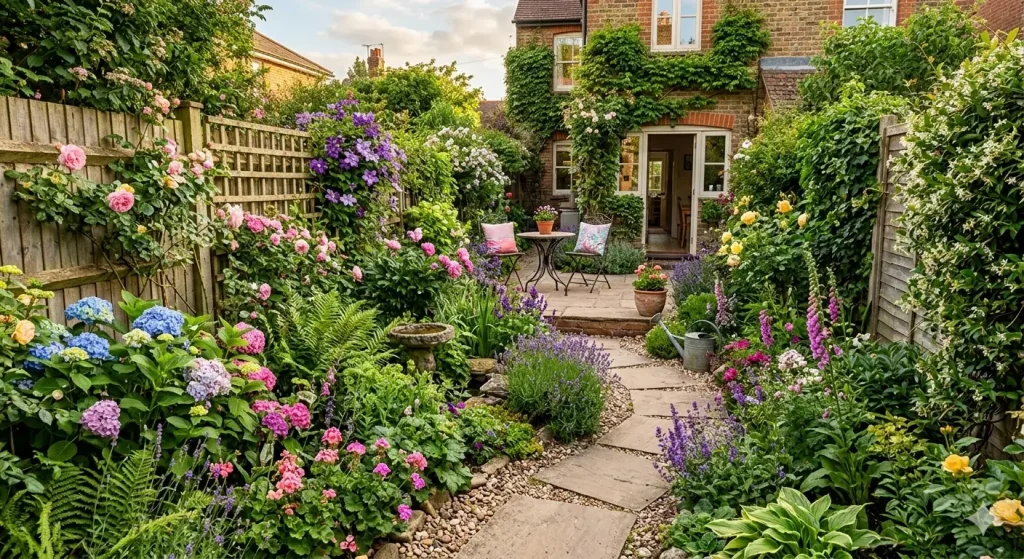
Let’s get one thing clear from the start. A small backyard doesn’t mean you can’t do things. It’s an invitation. It’s an invitation to unleash your creativity, think creatively, and create something that feels significantly larger than its actual size.
I’ve seen small backyards that feel like secluded getaways. I’ve also seen big yards that seem empty and boring. What’s the difference? Carefully planned design.
You can transform your narrow townhouse plot, small suburban yard, or postage-stamp-sized patio behind your flat into a place where you’ll want to spend time. Your neighbors will marvel over the fence, wondering how you achieved such a transformation.
So get a cup of coffee, get comfortable, and let’s look at 23 smart garden design ideas that can make your modest backyard go from “meh” to spectacular.
1. Living walls let you go up.
When you can’t spread out, move up. Vertical gardens are probably the best thing you can do for a small backyard. You can use pocket planters to put them on a fence, set up a trellis system, or even make a whole living wall.
Herbs, succulents, strawberries, and ferns all do well in vertical gardens. You can have plants, flowers, and even fresh food without having to give up any ground space. There are a lot of cheap modular systems on the market now, or you can make your own over the weekend with some pallet wood and a few screws.
The visual effect is also powerful. A green wall makes the space look bigger and more lush by drawing the eye up.
2. Make zones with different heights.
One single surface can get boring, especially in a small space. However, by varying the level slightly—such as by adding a raised deck, a sunken seating area, or a tiered planting bed—you create distinct areas that give the yard a layered and planned appearance.
Adding even one step up to a dining area or a garden bed that is a little higher up makes the space look more intriguing and adds depth. It makes the brain think the space is a multi-room area rather than a small box.
You don’t need to undertake a lot of heavy construction for this purpose either. A few stacked stone slabs or a simple wooden platform will work just fine.
3. Use mirrors to make your space look bigger.
This one sounds strange at first, but it works. A garden mirror that is framed to look like a window or an archway can really make a small backyard feel twice as big. It reflects light, plants, and the sky, making it look like there is depth when there isn’t.
Put it at the end of a path or on a fence where it is partially hidden by climbing plants. It’s like magic how it works. Make sure it’s a real outdoor mirror that can handle the weather, and put it where birds won’t get confused.
4. Pick furniture that can do more than one thing.
In a small backyard, every item needs to prove its worth. That means foldable tables, built-in storage seats, and seating that can also be planters.
A storage bench, for instance, gives you a place to sit and a place to put pillows and tools, and it doesn’t take up any more space than a typical bench. Foldable bistro sets are another excellent thing to have. You can pull them out when you need them and put them away when you don’t.
Think about how someone would furnish a small flat. Each item should have at least two uses.
5. Put a garden in a container.
Containers are an ideal choice for small yards. They can be moved around and used in many different ways. You can group pots of different sizes together for visual drama, line them up along a wall, or use them in certain places to mark pathways and areas.
Use several kinds of materials, such as terracotta, concrete, glazed ceramic, and metal, to add texture and character. Don’t hesitate to fill a few containers completely. Usually, one large statement pot holds more power than ten smaller ones arranged haphazardly.
You may move things around in container gardening if you want to change everything up, such as rearranging plants or adding new elements to create a fresh look and enhance the overall design of your garden. Your garden’s plan is never set in stone.
6. Put up a Narrow Water Feature
Water is a wonderful addition to any garden, and you don’t need a pond to enjoy it. A narrow rill (a shallow channel of water), a small bubbling urn, or a compact wall-mounted fountain can all fit into tiny places.
The sound of water running is quite soothing. It hides the noise of the city, draws in birds, and makes your yard feel like a luxury, even though it’s small. Some of these features are separate and merely need to be plugged in, such as water fountains and outdoor misters, which can enhance the soothing atmosphere without requiring complex installation. No plumbing. No drama.
7. Make a Pathway in a Diagonal Shape
This is a smart design trick that comes from interior design. Instead of putting a walkway directly down the middle of your yard, which makes it look shorter, put it diagonally from one corner to the other.
The longest line you can draw in a rectangle is a diagonal line. A diagonal path will make your backyard feel longer and bigger right away. You can use stepping stones, gravel, or bricks, depending on what you like. The angled line will catch the eye and make the space feel alive.
8. Take in the Strength of One Great Tree
One well-placed tree can hold together a whole modest garden. It gives shade, vertical interest, seasonal beauty, and a natural focal point. Consider a Japanese maple, an ornamental cherry, a magnolia, or a small fruit tree like a dwarf apple or fig.
To make it look more natural, plant it a little to the side. Use ground covers or spring bulbs that like shade to fill in the space. That one tree is the center of your garden, the item that everything else revolves around.
9. Use Hardscaping in Light Colors
Dark asphalt and fencing can make a small area feel like it’s getting smaller. Light-colored materials, such as pale stone, bleached wood, and whitewashed brick, bounce more light around and make the space feel open and spacious.
This doesn’t mean that everything needs to be white. Soft grays, warm sandstone tones, and natural wood colors all look wonderful. The idea is to stay away from anything that brings in light and makes the room feel heavy.
10. Put up string lights.
This is one of the easiest and best things you can do. String lights hanging from fences, across a pergola, or from the house to a post make the space feel instantly cozy. They make the area feel more like home, offer warmth, and make your backyard feel like an extension of your living room.
You won’t have to deal with any wiring problems if you use solar power. The high placement of the lights draws the eye upwards, enhancing the feeling of space.
To be honest, I’ve always seen a little backyard look better with string lights. They just do their job.
11. Make a Privacy Screen That Grows
Use tall grasses, bamboo, or columnar trees instead of a concrete fence to build a natural privacy screen that doesn’t make things feel boxed in. Plants like miscanthus, feather reed grass, or clumping bamboo grow tall and thin, giving you privacy without taking up a lot of area.
They also move in the wind, catch the light, and create texture, which a wooden fence can’t achieve. You get both seclusion and beauty in one simple stroke.
12. Make a Cozy Corner for a Fire Pit
A little fire pit might be the best place for people to meet, even in a small backyard. Fire bowls for tables, small portable fire pits, and even built-in gas fire features can fit into tiny places.
Put a few seats or a curved bench around it, and you’ve made a cozy little area that people will want to spend time in. It makes your yard feel warm and inviting and lets you spend more time outside in the cooler months.
Before making a decision, please verify the regulations in your area regarding open flames in homes.
13. Try planting in only one color.
Having too many colors in a tiny area might make it feel messy and stressful. Using only one or a few colors, such as all whites and greens, shades of purple, or several shades of pink, gives the room a serene, elegant air.
It also gives the room a more cohesive look, which makes it feel bigger. You aren’t disturbing the flow of the eye with sharp contrasts. Everything fits together, and the garden looks like one big piece of art.
This doesn’t mean dull. There is a lot of difference in texture, height, shape, and bloom shape within the same color family. For example, a white garden might have everything from fluffy hydrangeas to spiky foxgloves to jasmine that grows on the ground. Same shade. A very different person.
14. Make Raised Garden Beds
Raised beds are a fantastic way to make the most of a tiny yard. They help your back by making gardening simpler, enhance drainage, and make your landscape look very neat and tidy.
Even one or two raised beds along a fence line can grow many vegetables, herbs, or cut flowers in a little space. You can make them out of wood, Corten steel, or stone to fit your style.
They also give a small garden a planned look instead of an unintentional one by adding layers and structure.
15. Put up a shade sail or a pergola.
One of the best design moves for small gardens is to add an above structure. A pergola, even a modest lean-to type attached to the home, creates an outside space. It gives you dappled shade, holds climbing plants, and provides you a place to put lights or lanterns.
A shade sail is a sleek, modern option if a pergola seems too big. They come in many colors and designs, and they make a dramatic architectural statement while staying light.
The above part makes your yard feel more like a room and less like an open space, which makes it feel bigger and more planned.
16. Add Edible Landscaping
Who says that gardens for decoration and gardens for growing food have to be separate? Put the two together in a small backyard. Put herbs in between flowering perennials. Put a grapevine on top of your pergola. Instead of regular shrubs, plant blueberry bushes. Rainbow chard is a beautiful plant that makes a wonderful border.
Edible landscaping ensures that nothing is wasted. All of the plants look lovely and give you something to pick. It works well, looks great, and makes you feel good. A yard full of food is one that works hard and looks wonderful while doing it.
17. Include a statement piece of art.
A sculpture, a bold ceramic pot, a stunning piece of metalwork, or a bright mosaic panel can all be wonderful pieces of garden art that draw visitors in and make them forget they’re in a small yard.
It provides the eye a place to rest, starts a discussion, and adds character to the room. Put it at the end of a line of sight or in a corner that requires some visual weight.
Just don’t go too far. Each small garden should have one large piece of art. Give it some air. Let it get people’s attention.
18. Instead of grass, use gravel.
Let’s face it: maintaining a small grass area often requires more effort than it benefits. It has to be mowed, edged, watered, and fed, yet it still looks patchy since it doesn’t get enough sun or foot activity.
Change it to gravel. It doesn’t need much care, lets water through (excellent for drainage), and has a clean, Mediterranean aspect. You can make your yard seem lovely all year long with absolutely no work by adding stepping stones, plants that grow through the gravel, and a few well-placed containers.
Choose a material that goes well with the style of your home, like pea gravel, crushed limestone, or slate chippings.
19. Make it feel like a secret garden.
Small rooms are ideal for making that hidden garden feel. Use gates, arches, and many plants to make people feel like they are discovering something new and hidden.
A simple arch draped in climbing roses at the entrance to your backyard can change the whole experience. You aren’t just going outside. You’re going inside a garden. That change in your mind makes the environment feel exclusive, private, and romantic.
Arrange plants in layers at different heights, incorporate fragrant plants, and allow the garden to grow a little wild. The slightly overgrown look is ideal for small areas since it makes them feel large and generous.
20. Consider Seasonal Interest
You can set aside whole parts of a big garden for spring bulbs, summer perennials, or fall color. Every plant in a tiny garden needs to be able to grow in more than one season.
Pick plants that have more than one exciting time, such as spring blooms, intriguing leaves, fall colors, and gorgeous seed heads in the winter. Japanese maples, decorative grasses, hellebores, and evergreen ferns are all plants that look lovely for months, not just weeks.
Make sure that something is always going on by planning your planting ahead of time. A little garden that appears dead for four months of the year is a missed chance.
21. Make an outside room with rugs and other fabrics.
Want your backyard to feel like part of your home? Take care of it like one. Put an outside mat under your seating area, some cushions that can handle the weather on the chairs, and an outdoor curtain to make it feel softer.
These fabrics bring color, warmth, and a sense of closeness that makes even the smallest patio feel like a place to go. It tells your brain that here is a place to rest, not merely a path of concrete that leads to the trash cans.
Choose textiles that are rated for outdoor use so they can handle the sun and rain.
22. Set up a climbing garden.
Use your fences and walls to accomplish the work when there isn’t much space on the ground. Climbing plants like jasmine, clematis, climbing hydrangea, wisteria, passionflower, and ivy can turn a bare fence into a wall of green without needing much more than a few inches of soil at the base.
Put up trellises, tension wires, or mesh panels so that climbers may hold on to something. In a season or two, you’ll have a beautiful, vertical garden that smells delicious, looks lovely, and is home to wildlife.
Climbers also smooth out the sharp edges that make tiny yards feel boxy. They make the lines between things less clear and give you the feeling that nature is all around you.
23. Make It Simple
This could be the most crucial piece of advice. When you have a small backyard, the best thing you can do is hold back and focus on creating a few key features that enhance the space, such as a small garden, a seating area, or decorative plants. You don’t have to fit all of these ideas into your head. Choose three or four that speak to you and do them effectively.
A space with a simple design, a clear layout, a small number of materials, and a few carefully picked plants will always look better than one that is cluttered and attempting to be everything at once.
Edit without mercy. Give yourself some space to breathe. Give your eyes a break. The modest gardens I’ve seen that are the most beautiful are the ones where someone was able to keep things simple and let quality win over quantity, often incorporating a few carefully chosen plants and thoughtful design elements that create a harmonious and inviting space.
Last Thoughts
One of the most satisfying creative projects you can take on is designing a small backyard. The limits make you think carefully about every decision, and that thoughtfulness is what makes wonderful gardens.
You don’t need a big acreage to have a lovely outside environment. You need to have a clear goal, a few clever plans, and the ability to work with your space instead of against it.
Begin with something you enjoy. Do you want a spot to cultivate your food? Is there a place where you can relish a glass of wine during the summer nights? Do you desire a verdant haven that shields you from the urban surroundings? Allow your vision to guide your decisions, and these 23 suggestions will assist you in completing the details.
Your little backyard isn’t anything you need to fix. It’s a blank canvas just waiting for you to paint on it. And to be honest? The smallest gardens in the world are some of the most beautiful, memorable, and soul-nourishing.
Now walk outdoors and look at your yard with new eyes. Start to picture what it may look like. I promise you that there are more options than you believe.