Clean Edges and Greener Grass
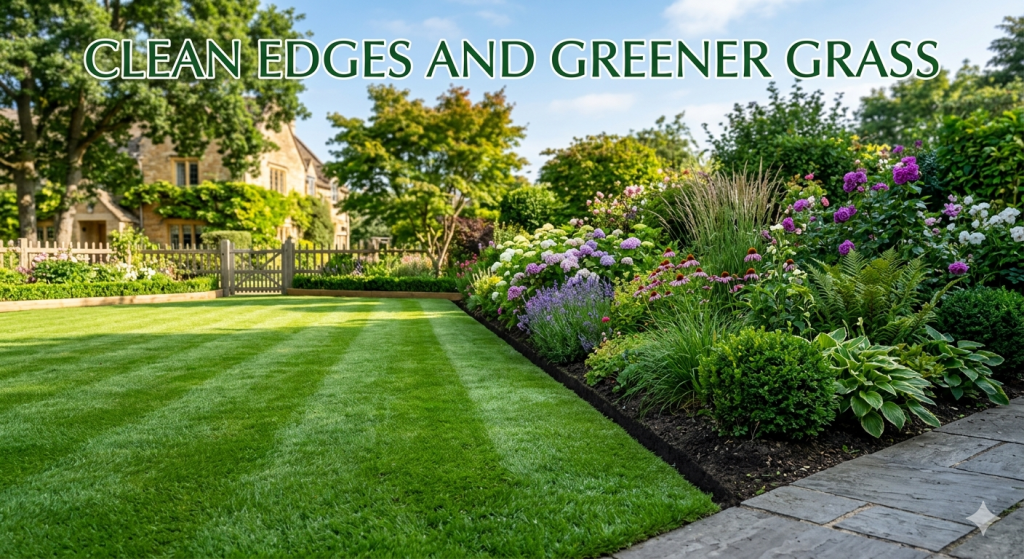
A well-maintained lawn captivates your attention. You are familiar with the type of lawn I am referring to. You might see it while walking to get coffee or taking the dog out: that one yard that looks like it belongs on a magazine cover. The edges are impeccably defined, the grass is a vibrant green that nearly glistens, and every aspect of it conveys a sense of care and attention.
I recall the moment I first truly recognized the distinction between a “good” lawn and an “excellent” one. I had just moved into my first home. My yard was… acceptable. It was kind of green. It was cut. But what about next door? Jim, my neighbor, had a lawn that looked like a golf course fairway had been neatly moved to a cul-de-sac in the suburbs. The edges of his driveway and walkway were cut with the same care as a surgeon. The grass was a deep, rich, and even color. It made my yard look like it was dead.
One day, while I stood there with my hands in my pockets, I asked him. “Jim, what’s your secret?”
He grinned, leaned on his edger, and said something I’ll never forget: “There’s no secret. You just have to do a few things right and keep doing them.”
That talk made me think differently about taking care of my grass. And to be honest, it changed how I thought about several things. Jim was right: you don’t need to spend a lot of money or hold a degree in horticulture to achieve that premium lawn look. You just need to know a few basic rules and treat your yard like you would anything else you care about.
Let’s talk about it. Let’s see how to get perfect borders and impossibly green grass. No fluff, no gatekeeping—just actual, useful things that work.
The “Premium Lawn Look” Is More Important Than You Think
Let’s discuss the reasons before we explore the methods. Some of you might be thinking, “It’s just grass. Who cares?”
That’s a good point. But here’s the thing: when people look at your house, the first thing they see is your grass. It establishes the mood. It communicates a tale before anyone even arrives at your front door. Taking care of your lawn shows that you care about the little things. It indicates that you are proud of where you reside. And whether we like it or not, that counts.
However, there is a certain sense of fulfillment in gazing out your window and observing a well-maintained yard, regardless of the opinions of the neighbors. It’s like getting up in the morning and making your bed. Does it change your life? Not likely. But does it set the mood for your day and make you feel like you’ve done something good? Of course.
A lawn that looks like it belongs in a magazine also adds genuine value to your house. Studies have indicated that attractive landscaping may raise the value of a property by 10 to 15 percent. That’s not nothing. If your home is worth $300,000, the lawn alone can increase its value by $30,000 to $45,000.
Yes, it’s “just grass,” but it’s also a major matter.
The Strength of Clean Edges
Upon discovering this, I was astounded: even with poor-quality grass, maintaining neat margins can significantly enhance the overall appearance of your lawn. Really. The first important thing you can do to make your yard look better is to clean up the margins.
It’s like getting a haircut. You can keep your hair length, but a barber’s trim around your ears and neck makes you look new. That’s what edging does for your lawn.
What Is “Edging”?
When we talk about edging, we mean making a clear, sharp line between your grass and hard surfaces like your driveway, sidewalk, patio, garden beds, and trees. It’s the line that separates them. The frame. Nice edging makes your lawn look like you planned it and took care of it, just like a pleasing frame improves a painting’s look.
How to Make Those Lines So Sharp
There are a few ways to approach edging, and the right method depends on your budget, your yard, and how much effort you want to put in.
These are the half-moon-shaped blades on a stick that you use by hand. Old school? Yes. Does it work? Very much so. You can change the depth and angle of your edge any way you like. If you have a tiny yard or like to work in the yard to relax, a manual edger is a great tool.
Powered Edgers: If you have a lot of land or just want to get the work done faster, a powered stick edger or a walk-behind edger is the best choice. Their vertical blade spins and cuts through grass effortlessly. The most important thing is to take your time. If you rush, the lines will be wobbly, which defeats the whole point.
String Trimmer Edging: This technique is probably the most typical way for homeowners to do it because most people already have a string trimmer. You turn it so that the string is spinning straight up and down, and then you walk along the harsh edges. It takes some work to get a straight line, but once you do, it’s quick and straightforward.
My best advice for edging is to do it before you mow, not after. If you edge first, the mower will pick up all the clippings and other debris that edging leaves behind. You save time by not having to blow off your driveway and walkways after you mow the lawn. It’s a simple modification to your habit that has a big effect.
Don’t Forget the Edges of the Bed
The lines along your hardscape are just as vital as the lines between your lawn and your garden beds or mulched areas. A tidy edge on your bed makes your lawn and landscaping look more polished and separates them visually.
You can use a manual edger, a flat spade, or even a power edger made for grass to keep the edges of your bed neat. Some individuals install real edging, such as metal, plastic, or stone, to maintain a straight line. I really like how a natural cut edge with a slight trench looks. It makes a shadow line that gives the picture more depth and dimension.
Being consistent is the most important thing. Edge your beds at least twice during the growth season to keep them looking lovely.
Let’s Talk About That Green Now.
Your lawn will look wonderful with clean lines, but the picture inside that frame is also important. There are a few basic things you need to get right if you want that deep, luscious, almost-too-green look.
It all begins with the soil.
I get it, I get it. Soil isn’t sexy. People don’t like to talk about dirt. But here’s the truth: the ground your grass grows in is what makes it healthy. Your grass will still appear exhausted even if you water and fertilize it a lot, as long as your soil is too dense, lacks nutrients, or has the improper pH.
Take a test of the soil. You may get a kit for just a few dollars at your neighborhood garden center or extension office. It will tell you how acidic or alkaline your soil is, how many nutrients it has, and how much organic matter it has. This report is the plan for everything else you’ll do.
Most grasses do best in soil with a pH between 6.0 and 7.0. Add lime if your soil is excessively acidic. If it’s too alkaline, add sulfur. It sounds difficult, but it’s really not. Usually, the results of the soil test come with particular suggestions.
Another thing that makes a big difference is aeration. Your grass roots can’t breathe, water can’t get through, and nutrients can’t get where they need to go if your soil is compacted. This feature is likely because you’ve never aerated it. Core aeration uses a machine to remove microscopic plugs of soil from your grass, making everything more open. Once a year is best, in the fall for cool-season grasses or late spring for warm-season grasses.
Mowing: The Most Overlooked Way to Keep Grass Green
Many people make mistakes here. They think that mowing is merely about cutting the grass short. But the way you mow has a significant effect on how green and healthy your lawn looks.
The first rule is to cut the grass high. Most types of grass look and work best when they are 3 to 4 inches tall. I can see that it feels lofty. You might assume that shorter is neater. But higher grass has deeper roots, blocks out weeds, holds onto water better, and most importantly, it appears greener. The longer blade has a greater surface area to photosynthesize, which means it has more chlorophyll and a deeper green hue.
Rule number two: Don’t cut more than one-third of the blade height at once. If you want healthy grass, you have to follow the one-third rule. Too much cutting at once can stress the plant, turn the tips brown, and make your grass look yellow and scalped.
Third rule: Always keep the blade of your mower sharp. A dull blade doesn’t cut the grass cleanly; it rips it. When the tips of your grass are torn, they turn brown and white, making the whole lawn look drab and faded. At least two or three times a season, sharpen your blade. It only takes 15 minutes with a file or bench grinder, and you can see the improvement right away.
Rule number four is to change the way you mow. Mowing in the same direction can cause grass to lean that way and the mower wheels to make ruts. Change between patterns that are horizontal, vertical, and diagonal. This approach also gives you those appealing stripes in the grass that some people like. Who doesn’t like that look?
Giving Your Lawn Food
Fertilization is the key to getting that next-level green. But you can’t just throw a bag of fertilizer on your grass anytime you want. The time, type, and amount are all important.
Early fall and late October are the best periods to feed cool-season grasses, including Kentucky bluegrass, fescue, and ryegrass. It’s okay to apply less in the spring, but in the fall, these grasses are actively developing and storing energy for the winter.
When Bermuda, Zoysia, and St. Augustine grasses are growing quickly in the late spring and summer, you should feed them.
A balanced slow-release fertilizer is the greatest thing you can use. Slow-release solutions nourish your grass over the course of several weeks, which lowers the chance of burning and gives it a more even green color. Quick-release fertilizers make the grass look appealing right away, but the color fades rapidly and can hurt the grass if you use too much of it.
Iron supplements are a simple tip that many owners of high-end lawns swear by. Iron won’t make your grass grow quicker, so you won’t have to mow it more often, but it will make the green color much deeper. A liquid iron application can make a lawn that looks fine appear nearly as if it were painted green, in the best way possible. Milorganite is a popular organic fertilizer that naturally contains iron. This is why lawn care experts love it so much.
Smart Watering
Watering is one of those tasks that looks straightforward but is hard for many people to do. What is the most prevalent mistake? Watering too often and not enough.
Your lawn needs around 1 to 1.5 inches of water every week, including rain. Instead of watering a little bit every day, the trick is to do it less often but for longer periods of time. When you water your lawn deeply, it makes the roots grow deeper into the earth, which makes the lawn more resistant to drought and stronger. Watering lightly and often keeps roots shallow and reliant on moisture all the time.
The optimal time to water is between 4 AM and 8 AM in the morning. This provides the grass time to soak in water before the heat of the day makes it evaporate. It also lets the blades dry before nightfall, which lowers the chance of getting a fungal illness.
If you’re not sure if you’re watering enough, put several empty tuna cans about your grass while the sprinklers are on. You’re satisfied when they’ve gathered approximately an inch of water.
What Makes Good Things Great
After you learn the basics—trimming, mowing, feeding, and watering—there are a few more things you can do to make your lawn go from “nice” to “how do they do that?”
Overseeding
Over time, even the greatest lawns will get thin places. Overseeding, which means putting new grass seed on top of your current lawn, fills in the barren spots and makes the grass thicker overall. A thick lawn looks better and is also less likely to get weeds and diseases.
Overseeding in early fall is best for cool-season lawns since the weather is mild and the circumstances are perfect for germination. Late April is usually the ideal time for warm-season lawns.
Managing Weeds
A dandelion peeking its yellow head through your perfectly green carpet is the quickest way to spoil the look of a high-end lawn. A thick, lush lawn is the best way to keep weeds from growing. They have a hard time getting started when there isn’t enough area for them.
But for the weeds that do show up, a targeted strategy is preferable. Instead of spraying your whole yard with a blanket herbicide, treat only the spots that need it. In early spring, you can use pre-emergent herbicides to stop crabgrass and other annual weeds from ever sprouting in the first place.
And often the easiest way is the best: pull them by hand. It feels good to pull a weed out by the root. Only me? Maybe.
Stripes on the Lawn
If you want to get people’s attention, learn how to stripe your lawn. Have you noticed the light and dark stripes on baseball and golf courses? You can do that in your own home. When you mow, you bend the grass blades in different directions to make it. You can get that professional, stadium-quality look with a simple striping kit for your mower or even a homemade roller.
The key is to mow in straight lines that overlap and change direction with each pass. The “light” stripes are where the grass bends away from you and reflects sunlight, while the “dark” lines are where the grass bends toward you and shows the blade’s darker color.
It doesn’t do anything, but wow, does it make a difference.
The Attitude That Goes Into a Premium Lawn
After years of working on my lawn and talking to people who take theirs seriously, I’ve discovered that the look of a premium lawn is less about any one product or method and more about a way of thinking.
It’s all about paying attention. Seeing when your lawn doesn’t seem quite right and figuring out why. Eliminate weeds before they spread. Before it becomes a problem, sharpen the blade on your lawnmower. Keep edging, even when you’re exhausted and it’s scorching outside.
It’s all about being patient. It doesn’t happen overnight that grass changes. It takes time to make a lovely lawn. You might make mistakes, such as watering at the incorrect time, cutting too short, or putting too much fertilizer on. That’s OK. The grass forgives. It comes back. You adapt and keep going.
And to be honest? It’s all about having fun. You’ll never stick with lawn maintenance long enough to see benefits if it feels like a job. But if you can find some calm in what you’re doing—like the rhythm of mowing, the satisfaction of a newly edged sidewalk, or the quiet pride of looking at something you’ve constructed with your own hands—then it ceases being labor and becomes something you look forward to.
Jim, my neighbor, recognized that. He didn’t pay someone to take care of his grass. He didn’t have any sophisticated tools. He had a push mower, a string trimmer, a bag of fertilizer, and a real passion for what he did. And his yard showed it.
Your Lawn, Your Way
In the end, your premium lawn doesn’t have to look like everyone else’s. You might think that a thick carpet of fescue with diagonal stripes is wonderful. Maybe it’s a neat Bermuda lawn with sharp edges and a clean, uncomplicated look. You might take care of a little patch of grass in front of a townhouse in the city with a reel mower and a set of hand shears.
No matter what it looks like, the approach is the same: frame it with clean lines, make it greener with good habits, and keep coming up week after week.
You don’t have to be a pro. You don’t need to spend a lot of money on tools. All you have to do is care enough to get the basics done correctly.
Start by working on your edges. Make your mower blade sharper. Water less often and deeper. Give your soil food. Be patient.
Soon, people will stop and stare at you. You’ll be the neighborhood’s Jim. And when someone inevitably approaches you with their hands in their pockets and tries to act casual, they ask you what your secret is.
You will smile. And you’ll be honest with them.
There is no secret. It’s all about doing a few things perfectly and doing them all the time.