Smart Watering A Clean Setup for Healthy Plants
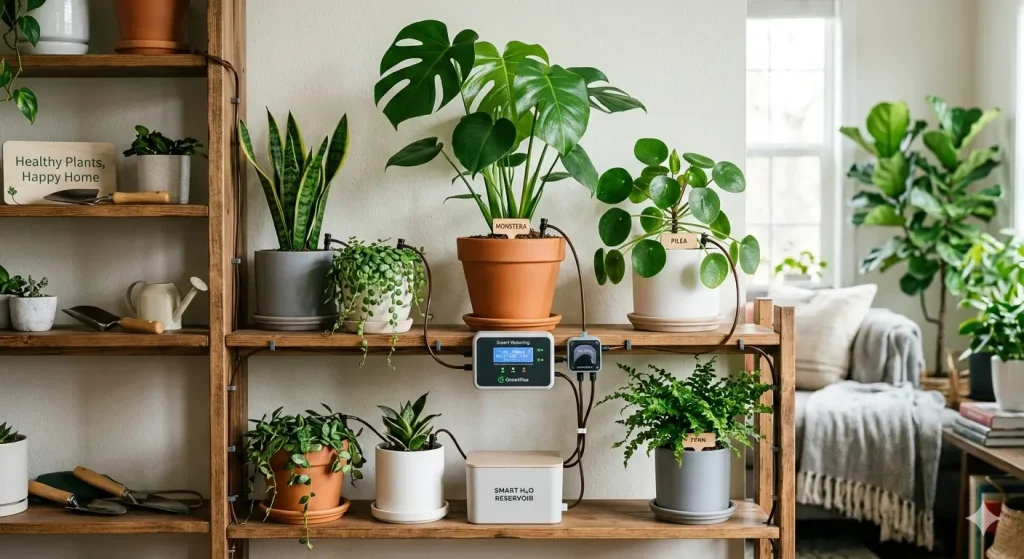
Water is life. Every gardener, homeowner, and plant enthusiast understands this truth. But there’s another truth that’s often overlooked: most of us are doing it incorrectly. We overwater. We are underwater. We water at the incorrect time. We allowed valuable liters to flow into the soil without benefiting the roots that needed them the most.
What was the result? Plants are stressed, money is wasted, and water bills are increasing with each season.
Smart watering alters all of that. It’s more than simply a fad or a luxury reserved for tech-savvy households with large estates. It is a practical, user-friendly approach to irrigation that employs technology, timing, and smart design to provide the correct amount of water to the right location at the right time.
In this article, we’ll explain everything you need to know about smart watering, including what it is, how it works, how to set it up, and how it saves you money while keeping your plants healthy. Whether you maintain a little balcony garden or a large backyard landscape, there is a smart watering option to suit your requirements and budget.
Let’s dive in.
What Exactly Is Smart Watering?
Smart watering is any irrigation method that employs data, sensors, timers, or automated systems to optimize water distribution to plants. Instead of relying on guesswork, such as turning on a hose and hoping for the best, smart watering systems measure actual circumstances and respond appropriately.
Smart watering can be as simple as attaching a timer to your garden hose and turning water on and off at predetermined intervals. At its most advanced, it includes Wi-Fi-connected controllers, soil moisture sensors, weather station integration, and app-based monitoring, which allows you to manage your complete irrigation system from your phone.
Regardless of complexity, the underlying idea remains the same: remove waste, maximize efficiency, and provide plants with what they require.
Traditional irrigation methods are inherently inefficient. Sprinklers spray water into the air, where a considerable portion evaporates before reaching the ground. Hand-watering is inconsistent—too much here, too little there. Standard timer-based systems operate on a timetable, regardless of whether it rained two hours ago.
Smart watering handles each of these issues.
Why Traditional Watering Falls Short
Before we look at the answers, it’s important to understand the issues with traditional watering systems. Recognizing these problems makes the case for smart irrigation almost obvious.
Overwatering is a silent plant killer.
Most people assume that more water means healthier plants. The contrary is frequently true. Overwatering is one of the most common causes of plant mortality in both gardens and interior settings. When soil remains wet, roots are unable to get oxygen. This causes root rot, fungal development, and a steady decline, which many gardeners misinterpret as underwatering, causing them to provide more water.
It’s a vicious loop that’s really common.
Water waste is expensive.
According to the Environmental Protection Agency (EPA), the average American family spends approximately 30% of its water consumption outside, largely for landscaping. In arid places, this figure can rise to 60 percent or higher. Evaporation, runoff, and improper delivery lead to significant water waste.
That waste appears straight on your power bill. Overwatering or using improper irrigation systems can cost households hundreds of dollars more per year than is necessary.
Timing is more important than you think.
Watering in the middle of a hot afternoon means that a big portion of your water evaporates before it can seep into the soil. Watering late at night can keep foliage moist for hours, which promotes fungal diseases. When you rely on human work, it’s easy to overlook the perfect window—early morning.
One size does not fit all.
Different plants have varying water requirements. Your lawn, vegetable garden, flower beds, and potted succulents all require varying quantities of water at different times. Traditional sprinkler systems treat everything the same, resulting in some areas receiving too much water and others receiving too little.
The Building Blocks of a Smart Watering System
A smart watering setup doesn’t have to be complicated. You can start small and scale up over time. Here are the core components that make up a well-designed smart irrigation system.
1. Smart Controllers
The brain of any smart watering system is the controller. Unlike basic timers that simply turn water on and off at set times, smart controllers adjust watering schedules based on real-world data.
Modern smart controllers connect to your home Wi-Fi network and pull information from local weather stations, soil sensors, and even satellite data to determine whether your plants actually need water on any given day. If rain is in the forecast, the system skips the scheduled watering. If temperatures spike and humidity drops, it may add an extra cycle.
Popular smart controllers on the market include the Rachio, RainMachine, Orbit B-hyve, and Hunter Hydrawise. Most of these are compatible with smart home ecosystems like Amazon Alexa, Google Home, and Apple HomeKit, allowing voice control and seamless integration with your other devices.
Key features to look for:
- Weather-based scheduling (evapotranspiration adjustments)
- Wi-Fi connectivity and app control
- Zone management (different settings for different areas)
- Rain delay and freeze protection
- Water usage tracking and reporting
2. Soil Moisture Sensors
While weather data is helpful, the most accurate way to determine whether your plants need water is to measure moisture levels directly at the root zone. That’s where soil moisture sensors come in.
These small devices are buried in the ground near your plants’ roots. They continuously monitor how wet or dry the soil is and relay that information to your controller. When the soil drops below a certain moisture threshold, the system triggers watering. When it’s adequately moist, the system holds off.
This root-level intelligence eliminates the guesswork entirely. Your system doesn’t just guess based on weather patterns — it knows the actual conditions underground.
Some sensors are wired directly into your irrigation controller, while others use wireless communication (Bluetooth or Wi-Fi) to send data to a hub or app.
3. Drip Irrigation
If smart controllers are the brain, drip irrigation is the circulatory system. Drip irrigation delivers water slowly and directly to the base of each plant through a network of tubes, emitters, and micro-sprinklers.
Compared to traditional sprinklers, drip irrigation is dramatically more efficient. It reduces water loss from evaporation and runoff, delivers water precisely where roots can access it, and keeps foliage dry (reducing disease risk).
Drip systems are ideal for garden beds, vegetable patches, container plants, hedges, and trees. They can be laid on the surface, buried just below the soil, or even integrated into raised beds and planters.
Advantages of drip irrigation:
- Up to 90 percent water efficiency (compared to 50–70 percent for sprinklers)
- Reduced weed growth (water goes to plants, not empty soil)
- Lower water pressure requirements
- Easy to customize and expand
- Minimal runoff and erosion
4. Rain Sensors and Weather Stations
Rain sensors are simple, inexpensive devices that detect when it’s raining and signal your irrigation controller to pause scheduled watering. They’re one of the simplest upgrades to a system, and in some areas, they’re required for automated irrigation.
For even more precision, personal weather stations can be added to your property. These measure temperature, humidity, wind speed, rainfall, and solar radiation—all factors that influence how quickly your soil dries out and how much water your plants consume.
When paired with a smart controller, this hyperlocal weather data enables extremely precise watering adjustments.
5. Flow Meters
Flow meters measure the actual volume of water passing through your irrigation system. They serve two important functions: tracking water usage for billing awareness, and detecting leaks or broken lines.
If your system suddenly uses 40 percent more water than usual on a routine cycle, a flow meter will flag the anomaly. This early detection can save you from costly water damage and repair bills, not to mention the wasted water itself.
Setting Up Your Smart Watering System: A Step-by-Step Guide
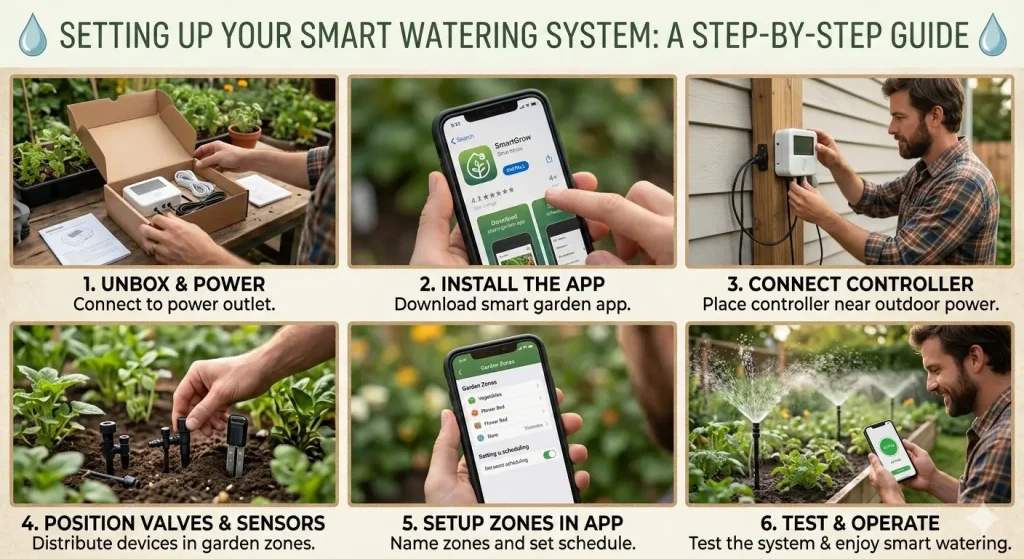
Ready to create your own smart watering system? This comprehensive guide will assist you in initiating a new system or enhancing an existing one.
Step 1: Assess Your Landscape
Begin by mapping your property to determine unique irrigation zones. A zone is any area that has comparable flora, soil type, sun exposure, and water requirements.
For example:
Zone 1: Front lawn (full light, high water requirements).
Zone 2: Flowerbeds along the driveway (partial shade, moderate water requirements).
Zone 3: Vegetable garden (full sun, varying water requirements by crop)
Zone 4: Potted plants on the patio (container-specific irrigation).
Zone 5: Native shrubs and trees (established with minimal water requirements)
Grouping similar plants together is the first step toward more efficient watering. If you’re still in the planting phase, plan your landscape with hydrozoning in mind, grouping plants with comparable water requirements together.
Step 2: Select your delivery method.
Choose the most appropriate irrigation strategy for each zone.
Lawns: Rotary or pop-up sprinkler heads linked to a smart controller.
Garden beds and borders: drip irrigation with separate emitters.
Vegetable gardens: drip tape or soaker hoses on a timer.
Container plants use micro-drip systems with adjustable emitters.
For trees and large shrubs, use deep-root watering bubblers or drip rings.
Mixing delivery techniques across zones is totally acceptable—and even recommended. There is no rule that requires your entire property to employ the same form of irrigation.
Step 3: Install a Smart Controller.
Replace your current irrigation timer (or install a new one) with a smart controller. Most smart controllers are designed for simple DIY installation and come with detailed instructions. If your current system employs a conventional irrigation controller, the wiring is usually compatible.
During setup, you will enter information about each zone, including plant kind, soil type, sun exposure, slope, and sprinkler type. The controller uses this data to generate appropriate watering schedules.
Connect the controller to your Wi-Fi network and then download the companion app. From here, you may remotely monitor, tweak, and manage your system.
Step 4: Add sensors.
Install soil moisture monitors in your most vital places, such as the vegetable garden, flower beds, and any areas where you’ve previously experienced overwatering or underwatering.
Place sensors at root depth (about 4-6 inches for most garden plants and 2-3 inches for lawns). Avoid positioning them too close to emitters or sprinkler heads, since this may result in misleading readings.
If your budget allows, consider adding a rain sensor or weather station to further improve your system’s intelligence.
Step 5: Test and calibrate.
Run each zone manually and track the outcomes. Look for:
Ensure that the coverage is even, with no areas left dry or flooded.
Proper emitter function (without obstructions or leaks)
Correct runtimes (water should soak in without runoff).
Sensor accuracy (readings should correspond to actual soil conditions)
Adjust emitter placement, run times, and scheduling as necessary. This calibration phase is critical; even the most intelligent controller cannot compensate for a poor physical setup, which can lead to inefficient water usage and negatively impact plant health.
Step 6: Monitor and adjust seasonally.
Smart irrigation is not a one-time solution. While your system will handle daily modifications automatically, you should evaluate performance and make seasonal changes:
Spring: Gradually increase watering as temps rise and plants begin active growth.
During summer heat waves, closely monitor your plants for any signs of stress.
Fall: Reduce frequency as growth stops and temperatures fall.
Winter: In cold climates, turn off or winterize your system.
Most smart controller apps include usage information and recommendations, making seasonal modifications simple.
How Smart Watering Saves You Money
Let’s talk numbers. The economical justification for smart irrigation is compelling.
Reduced water consumption.
The EPA’s WaterSense program found that smart irrigation controllers can cut outdoor water use by 20 to 50 percent when compared to traditional timer-based systems. For a home that spends $100 per month on water during the growth season, the reduction equates to savings of $20 to $50 per month, or $120 to $300 for a typical six-month watering season.
Drip irrigation increases these savings even further. Drip systems use 30 to 50 percent less water than sprinklers to maintain plant health because they eliminate evaporation and runoff losses.
Lower utility bills.
Water conservation leads directly to lower utility expenses. However, there is an additional benefit: many localities impose tiered rates for water usage, which means that the more you consume, the higher the per-gallon fee. Reducing total usage may allow you to move into a cheaper pricing category, effectively increasing your savings.
Fewer plant replacements.
Healthy plants are less expensive than dying ones. Plants thrive when their irrigation system provides continuous, sufficient moisture. You spend less on replacements, less on soil amendments to repair soggy beds, and less on fungicides and disease treatments caused by incorrect irrigation.
Rebates and incentives.
Many water providers provide incentives for installing smart controllers, rain sensors, and drip irrigation systems. These incentives can cover a large percentage of your initial investment. Check with your local water provider to find out what programs are available in your area.
Leak detection prevents costly repairs.
A minor break in an underground irrigation system might waste thousands of gallons before you realize it. Smart systems equipped with flow meters and pressure monitoring can detect leaks in minutes and send you an alert via your phone. Early detection helps to avoid water damage, soil erosion, and increased expenditures.
Smart Watering for Indoor Plants
Smart irrigation isn’t just for outdoor landscapes. Indoor plant enthusiasts can profit from similar concepts on a smaller scale, such as using smart irrigation systems that monitor soil moisture levels and automatically water plants, ensuring optimal growth conditions.
Self-watering Planters
Self-watering pots feature a reservoir mechanism that allows plants to draw moisture as needed via capillary action. This eliminates both overwatering and underwatering, making them ideal for busy homeowners or frequent travelers.
Indoor Drip Kits
Small-scale drip irrigation solutions designed for indoor use can automate the watering of houseplant collections. These normally connect to a tiny water reservoir (no plumbing is required) and use a battery-powered timer to give precise amounts of water to each pot.
Smart Plant Monitors
Devices such as the Xiaomi Plant Monitor, ECOWITT soil sensors, and Sustee moisture indicators monitor soil moisture, light levels, and temperature for each plant. Some connect to apps that deliver notifications when a plant requires care.
For professional indoor gardeners with vast collections, these instruments simplify care routines and avoid the most common cause of houseplant death: inconsistency in watering.
Environmental Benefits Beyond Your Bill
Smart irrigation is not just economical; it is also environmentally friendly.
Water Conservation
Fresh water is a finite resource that is becoming increasingly scarce in many places of the world. Residential irrigation provides for a significant portion of municipal water consumption, particularly during the summer months. Every family may help with conservation efforts by utilizing smart irrigation to eliminate waste, such as by using timers and moisture sensors to ensure that only the necessary amount of water is used for their gardens and lawns.
Reduced Pollution from Runoff
When you overwater, surplus water rushes off your property and into storm drains, carrying fertilizer, pesticides, and debris to nearby rivers. This discharge promotes algal blooms, degrades water quality, and harms ecosystems. Smart watering reduces runoff by using only what the soil can absorb.
Reduced Energy Use
Water treatment and distribution require considerable amounts of energy. Pumping, purifying, and delivering water to your home leaves a carbon footprint. By using less water, you indirectly reduce the energy consumed by your local water company, making a tiny but significant contribution to lowering greenhouse gas emissions.
Supporting Biodiversity
Healthy, well-watered gardens with proper irrigation procedures benefit local pollinators, birds, and beneficial insects. Overwatered landscapes, on the other hand, are frequently dominated by fungal diseases and shallow-rooted plants, which do not support diverse ecosystems.
Common Mistakes to Avoid
Even with clever technology, there are flaws that can impair your system’s performance.
Ignoring Soil Type.
Clay soil holds rainwater for far longer than sandy soil. If your smart controller does not consider soil type, it may overwater clay areas or submerge sandy ones. Please ensure that you enter the correct soil information during setup, and consider conducting a soil test if you’re uncertain.
Poor sensor placement.
A soil moisture sensor placed in a shady, mulched area will read differently from one positioned in direct sunlight on bare soil—even if they are in the same zone. Place sensors in representative locations that reflect the average circumstances in each zone.
Neglecting maintenance.
Drip emitters clog. Sprinkler heads shatter. Filters become dirty. Smart systems lessen the need for daily monitoring, but they still require routine maintenance, such as checking for any malfunctions or ensuring that all components are functioning properly to prevent issues like shattering sprinkler heads or dirty filters. Please inspect your system at the start and end of each growing season, and address any concerns promptly.
Over-reliant on technology
Smart controllers are tools, not a replacement for observation. Take regular walks through your garden. Look at your plants. Examine the earth with your fingertips. Technology delivers data, but your eyes and experience provide context that no sensor can match.
Setting and Forgetting
As previously stated, seasonal changes are essential. A watering regimen that works great in July may be extremely excessive in October. Review and tweak your settings as the seasons change and your landscape evolves.
Budget-Friendly Smart Watering Options
You don’t have to spend thousands of dollars to start watering more efficiently. Here are several low-cost entry-level solutions that produce significant effects.
Basic hose timer ($15-$30): A simple battery-powered timer that connects to your outside faucet. Set the irrigation days, start timings, and length. While it may not be considered “smart” in the traditional sense, it offers a significant improvement over manual watering by allowing for more consistent and efficient watering schedules, which can lead to healthier plants and water conservation.
Drip irrigation beginner kit ($20-$50): Most garden centers and internet vendors provide kits with tubing, emitters, connectors, and a simple timer. This kit is perfect for a vegetable garden or flowerbed.
Smart plug and solenoid valve ($30-$50): A unique DIY option. Connect a solenoid valve to your hose bib, plug it into a smart outlet, and control the watering with your smart home app or voice assistant.
Entry-level smart controllers ($80-$150): Models such as the Orbit B-hyve and Wyze Sprinkler Controller provide weather-based scheduling, smartphone control, and zone management at an affordable price.
Soil moisture sensor ($10-25): These are stand-alone sensors that must be read manually. They don’t work automatically, but they help you learn about your soil and make better watering choices.
Combining a handful of these components strategically allows you to create a highly effective smart watering arrangement for less than $200.
The Future of Smart Watering
The smart irrigation field is constantly expanding because of advancements in IoT (Internet of Things) technology, artificial intelligence, and increased worldwide awareness of water scarcity.
AI-powered controllers are starting to employ machine learning to evaluate your landscape’s individual water requirements over time, automatically fine-tuning plans based on historical patterns and plant responses.
Satellite and drone imagery are being investigated for large-scale landscape management, allowing property owners to detect stressed areas before apparent signs arise.
Integrated smart home ecosystems will gradually incorporate irrigation into whole-house water management, synchronizing indoor and outdoor usage, detecting leaks throughout the property, and providing uniform reporting on overall water consumption.
Greywater recycling systems, along with sophisticated controls, can channel water from sinks, showers, and washing machines to outside irrigation, further lowering freshwater consumption.
As these technologies improve and become more inexpensive, smart watering will go from an optional extra to a basic aspect of responsible home ownership.
Final Thoughts
Smart irrigation is one of those uncommon innovations that benefits everyone and everything involved. Your plants become healthier as they receive constant, sufficient hydration. Your pocketbook becomes heavier when you quit paying for water that evaporates, runs off, or drowns your roots. Your local environment benefits from less garbage and pollution. And your daily routine becomes simpler as technology handles the timing and measurement tasks that used to require continual attention.
The beauty of smart watering is its capacity to scale. You may begin with a $15 hose timer and a thoughtful watering schedule, then progressively add sensors, controllers, and drip lines as your budget and interest increase. There is no minimum commitment needed to begin making a difference.
What counts most is the adjustment in mindset: from watering by habit to watering by necessity. When you make that change, everything else falls into place automatically.
Your plants will thank you. Your utility bill will thank you. Every drop of water you save is one that will remain available in the future.